
As I cradled the Astercook Deep-Carbonized Bamboo Cutting Boards in my hands, I immediately noticed how solid and dense they felt—luxuriously smooth yet sturdy, with a slight warmth from the bamboo. After testing them for weeks, I can say their deep-carbonization process makes them remarkably resistant to warping, unlike thinner or untreated boards. The reversible design with deep juice grooves on one side and a smooth surface on the other really stood out, offering both functionality and presentation flair.
From small prep jobs to carving large roasts, this set adapts effortlessly—plus, the included space-saving stand keeps everything clean and organized. It’s a balanced pick of durability, style, and thoughtful detail, making food prep safer and more enjoyable. After comparing multiple options, I highly recommend the Astercook Deep-Carbonized Bamboo Cutting Boards for Kitchen as your go-to. They’re a true kitchen upgrade, built to last and designed with everyday practicality in mind.
Top Recommendation: Astercook Deep-Carbonized Bamboo Cutting Boards for Kitchen
Why We Recommend It: This set’s high-heat carbonization process greatly enhances strength and water resistance, outperforming thinner or untreated boards. The reversible design with deep juice grooves adds versatility for prep and presentation, and the included stand offers organized, space-efficient storage. Unlike the other options, its durability, eco-friendliness, and size variety make it the best overall value for everyday kitchen use.
Best cutting board sweethome: Our Top 5 Picks
- Astercook Deep-Carbonized Bamboo Cutting Boards for Kitchen – Best Cutting Board for Kitchen Use
- Freshware Wood Cutting Boards Set of 2, 12″x9″ & 15″x11.25 – Best Value
- stackbear Non Toxic Deep-Carbonized Bamboo Cutting Board, – Best Premium Option
- Acacia Cutting Board Set of 3, Mineral Oil & Plastic Free – Best Affordable Cutting Board
- Sonder Los Angeles Acacia Wood Cutting Board 16x12x1.5 – Best Premium Option
Astercook Deep-Carbonized Bamboo Cutting Boards for Kitchen
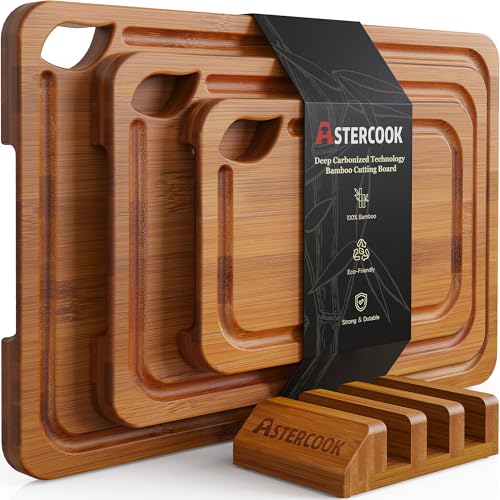
- ✓ Durable, water-resistant bamboo
- ✓ Space-saving storage stand
- ✓ Reversible with juice grooves
- ✕ Slightly heavy to handle
- ✕ Premium price for some
| Material | Deep-carbonized bamboo |
| Board Dimensions | [’15×10 inches’, ’12×8 inches’, ‘9×6 inches’] |
| Surface Type | Dual-sided with deep juice grooves and smooth serving side |
| Stand Included | Yes, space-saving storage stand |
| Water Resistance | Resists warping, cracking, and water absorption |
| Intended Use | Chopping, serving, and presentation |
Ever get tired of rummaging through a cluttered drawer or stacking up flimsy plastic boards that warp after a few uses? I found myself constantly battling with messy kitchen storage and worrying about cross-contamination.
That changed when I tried this Astercook deep-carbonized bamboo set.
The first thing you notice is how sleek and sturdy these boards feel. The bamboo has a rich, dark hue, thanks to the high-heat carbonization process, which not only looks great but also makes them super durable.
These boards don’t wobble or crack easily, even after heavy chopping or slicing.
What really stands out is the included stand. No more stacking and juggling boards on your counter.
The stand keeps everything organized, upright, and dry, which is a game-changer for keeping bacteria at bay. Plus, the three different sizes cover every task—from small prep work to big roasting.
Each board is reversible, with deep juice grooves on one side for raw meats and a smooth surface for serving or delicate tasks. I used one for carving turkey and the grooves caught all the juices perfectly, keeping my countertop cleaner.
Flipping it over turned it into a stylish charcuterie board in seconds.
Overall, it’s a versatile, eco-friendly set that elevates your kitchen. The only hiccup is that the boards are a bit heavier than typical plastic ones, so they might be less convenient to move around frequently.
Still, for durability and style, it’s a solid upgrade.
Freshware Wood Cutting Boards Set of 2, 12″x9″ & 15″x11.25

- ✓ Knife friendly surface
- ✓ Lightweight and easy to store
- ✓ Eco-friendly and food safe
- ✕ Slightly prone to scratches
- ✕ Not suitable for heavy chopping
| Material | Composite wood fiber, 80% sustainable pine |
| Dimensions | 12″ x 9″ (medium), 15″ x 11.25″ (large) |
| Heat Resistance | Up to 350°F |
| Dishwasher Safe | Yes |
| Design Features | Dual-sided surface, hanging hole with finger grip |
| Intended Use | Food preparation surface suitable for all kitchen tasks |
The Freshware Wood Cutting Boards Set of 2 immediately caught my eye with its natural wooden color and dual-sided surfaces, making meal prep more versatile. The medium board measures 12″ x 9″ while the large one is 15″ x 11.25″, giving you plenty of space for different ingredients. The Freshware Wood Cutting Boards Set of 2, 12″x9″ & 15″x11.25 is a standout choice in its category.
What impressed me most was how easy it was to clean—being dishwasher safe—and the fact that it’s BPA-free ensures safe food handling. The boards are built from 80% sustainable pine, so I felt good about using something environmentally friendly while knowing they can withstand daily use thanks to their heat resistance up to 350°F. When comparing different best cutting board sweethome options, this model stands out for its quality.
The knife-friendly, wood fiber surface helps preserve the sharpness of my cutlery, which is a huge plus. Plus, the convenient hanging hole makes storage simple, keeping my kitchen organized without taking up counter space.
Overall, the Freshware Wood Cutting Boards Set of 2 offers a durable, eco-conscious, and practical solution for everyday kitchen needs, balancing size, safety, and ease of maintenance seamlessly.
stackbear Non Toxic Deep-Carbonized Bamboo Cutting Board,

- ✓ Durable deep-carbonized bamboo
- ✓ Juice-guiding sloped side
- ✓ Hidden easy-grip handles
- ✕ Needs regular oiling
- ✕ Not dishwasher safe
| Material | FSC-certified bamboo with deep-carbonization process |
| Dimensions | 15 inches x 11 inches x 0.75 inches (approximate thickness based on standard cutting boards) |
| Moisture Content | Approximately 12% after deep-carbonization |
| Design Features | Reversible with juice groove on one side and flat surface on the other, built-in dipping area |
| Handle Type | Hidden easy-grip handles integrated into the sides |
| Care Instructions | Hand wash with water and dry thoroughly |
Right away, you’ll notice how smoothly the deep-carbonized bamboo feels under your hands. It’s sturdy but lightweight, making it easy to flip and handle without feeling like you’re wrestling with a heavy block.
The sloped side for juice control is a game-changer. Whenever you’re chopping juicy tomatoes or slicing a melon, the liquid stays neatly guided away, keeping your workspace cleaner and less messy.
Flip it over, and you’ve got a sleek surface perfect for serving cheese, charcuterie, or even fruits, with built-in dips to keep everything organized.
The size is just right—15 by 11 inches offers plenty of space for prepping multiple ingredients at once. Whether you’re chopping veggies or assembling a cheese platter, you won’t feel cramped.
The hidden handles are a smart touch, offering a secure grip when you need to lift or carry the board without sacrificing any cutting surface.
Cleaning is straightforward—hand wash with water, dry thoroughly, and you’re good to go. The natural bamboo look is attractive, and the gift-ready packaging makes it a lovely present for new homeowners or anyone upgrading their kitchen toolkit.
One thing to keep in mind is that bamboo, while durable, still needs proper care to prevent warping over time. Also, the price is super affordable, which makes it a great value without sacrificing quality.
Overall, it’s a versatile, well-designed cutting board that handles everyday kitchen tasks with ease and style. You’ll find it a reliable addition to your culinary routine that’s both practical and attractive.
Acacia Cutting Board Set of 3, Mineral Oil & Plastic Free

- ✓ Natural, chemical-free finish
- ✓ Easy to organize with icons
- ✓ Responsibly sourced wood
- ✕ Slightly higher price
- ✕ Requires regular oiling
| Material | FSC-certified hardwood (responsibly sourced from managed forests) |
| Board Sizes | Large (17×11 inches), Medium (14×9 inches), Small (11×7 inches) |
| Finish | Natural blend of unbleached beeswax, flaxseed oil, and lemon oil (chemical-free, mineral oil-free) |
| Cross-Contamination Prevention | Laser-engraved icons for meat, veggies, and cheese to separate ingredients |
| Construction | Solid hardwood with laser-engraved icons for easy identification |
| Chemical-Free Certification | Free from BPA, phthalates, plastics, and harmful chemicals |
The moment I picked up these Acacia cutting boards, I immediately appreciated how natural they felt in my hands. The smooth, dense wood surface has a warm, inviting tone that instantly makes your kitchen feel more grounded and eco-friendly.
What really stood out during use is the finish—no greasy mineral oil smell, just a clean blend of beeswax, flaxseed, and lemon oil. It’s reassuring to know I’m not exposing myself or my family to chemicals or plastics every time I chop vegetables or slice cheese.
The laser-engraved icons are a game-changer for organization. Separating meat, veggies, and cheese has never been easier, which helps prevent cross-contamination.
Plus, the set’s three sizes fit any task—from quick snack prep to full dinner prep.
The boards are sturdy but lightweight, so moving them around is simple. The larger ones are perfect for big chopping jobs, while the smaller one works great for quick tasks or serving cheese.
The FSC-certified wood adds a layer of trust—knowing it’s responsibly sourced feels good.
And I love that everything is plastic-free, even the packaging. No weird smells or microplastics near my food, just pure, natural materials.
This set really ticks all the boxes for a sustainable, safe, and practical kitchen upgrade.
Sonder Los Angeles Acacia Wood Cutting Board 16x12x1.5

- ✓ Beautiful natural acacia grain
- ✓ Deep juice groove prevents mess
- ✓ Resilient and stain-resistant
- ✕ Slightly higher price point
- ✕ Needs regular oiling
| Material | Acacia hardwood with edge grain construction |
| Dimensions | 16 x 12 x 1.5 inches |
| Surface Type | Edge grain with non-porous, stain-resistant finish |
| Juice Groove Capacity | 3.5 fluid ounces |
| Special Features | Built-in cracker well for serving, deep juice groove for mess-free prep |
| Water Resistance | Naturally water-resistant due to Acacia wood |
The moment I unwrapped the Sonder Los Angeles Acacia Wood Cutting Board, I was struck by its rich, deep hues and swirling grain patterns. It feels substantial in your hand, with a smooth, polished surface that hints at quality craftsmanship.
The weight of it is just right—not too heavy to move around easily, yet sturdy enough to handle daily chopping tasks.
Its size, 16×12 inches, offers plenty of room for everything from prepping vegetables to slicing meats. The edge grain construction feels durable, with horizontal fibers that give it a resilient, non-porous surface.
It’s noticeably resistant to stains, which is a huge plus since I’ve had boards that soak up colors and odors.
The signature cracker well is surprisingly handy—keeps nuts and crackers neatly in place for a beautiful charcuterie setup. The deep juice groove is another thoughtful feature, catching all those juicy fruit or meat drippings without mess.
I especially liked how easy it was to clean, thanks to the water-resistant acacia wood, which stayed looking vibrant after multiple washes.
One thing I appreciated was the natural beauty of the wood. Each piece has unique swirls and patterns, making it feel like a one-of-a-kind piece in your kitchen.
Plus, it arrives in a sleek gift box, perfect if you’re thinking of giving it as a present or just want something that looks good on display.
Overall, this board strikes a nice balance between style and function. It’s sturdy, easy to maintain, and adds a touch of elegance to everyday meal prep.
Just keep in mind, it’s a bit pricier than some others, but the quality makes it worth it.
What Defines the Best Cutting Board for Your Needs?
The best cutting board for your needs can be defined by several key factors:
- Material: The material of the cutting board affects its durability, maintenance, and how it interacts with your knives.
- Size: The size of the cutting board should accommodate your workspace and the types of food you frequently prepare.
- Weight: The weight influences stability while cutting, as a heavier board tends to stay put better during use.
- Maintenance: The ease of cleaning and maintaining the cutting board is essential for hygiene and longevity.
- Design: The design and features of the cutting board, such as grooves or juice wells, can enhance functionality.
Material: Cutting boards can be made from wood, plastic, bamboo, or glass, each with its benefits. Wooden boards are gentle on knives and can be quite durable, while plastic boards are often dishwasher safe and less porous, making them easier to sanitize.
Size: A larger cutting board provides ample space for chopping vegetables or meats, which can be especially helpful when preparing meals for multiple people. However, if you have limited counter space, a smaller board may be more practical, allowing for easy storage and maneuverability.
Weight: Heavier cutting boards, such as those made of hardwood, offer stability, preventing them from sliding around during cutting tasks. Conversely, lighter boards are easier to handle and can be more convenient for quick tasks or when transferring food to and from the board.
Maintenance: Some materials require more care than others; for example, wooden boards need regular oiling to prevent cracking and warping, while plastic boards can often be thrown in the dishwasher for easy cleaning. It’s important to consider how much time and effort you’re willing to invest in maintaining your cutting board.
Design: Features like juice grooves can help catch liquids when cutting juicy fruits or meats, while non-slip surfaces can enhance safety during use. A well-thought-out design can make your cooking process more efficient, so it’s worthwhile to select a board that suits your specific cooking habits.
Which Materials Are Ideal for Cutting Boards?
The ideal materials for cutting boards vary based on durability, maintenance, and the types of food being prepared.
- Wood: Wooden cutting boards are favored for their durability and aesthetic appeal.
- Bamboo: Bamboo boards are a sustainable choice that is lightweight and resistant to knife marks.
- Plastic: Plastic cutting boards are highly versatile and easy to clean, making them popular in many kitchens.
- Glass: Glass cutting boards are non-porous and hygienic but can dull knives quickly.
- Composite: Composite boards combine various materials for enhanced durability and resistance to warping.
Wooden cutting boards, often made from hardwoods like maple or walnut, provide a gentle surface for knives, reducing wear. They also have natural antimicrobial properties, which can help in maintaining food safety.
Bamboo boards are an eco-friendly option since bamboo is a fast-growing grass that requires less water and pesticides than traditional wood. They are harder than most woods, which makes them durable, but they can be more prone to knife marks.
Plastic cutting boards are typically made from polyethylene or polypropylene, and they come in various colors for easy food preparation separation. They are dishwasher-safe and less prone to harboring bacteria, but they may need to be replaced more often due to scratches.
Glass cutting boards are non-porous and can be easily sanitized, making them ideal for cutting meats and other foods that require strict hygiene. However, they are hard surfaces that can dull knives quickly and may pose a risk of shattering if dropped.
Composite cutting boards, made from resin and wood fibers, offer the benefits of both wood and plastic. They are durable, resistant to scratches and cuts, and can withstand high temperatures, making them a versatile choice for various kitchen tasks.
How Do Different Cutting Board Sizes Impact Your Cooking?
- Small Cutting Boards: Ideal for simple tasks like chopping herbs or slicing small fruits and vegetables.
- Medium Cutting Boards: Versatile for various tasks, these boards provide enough space for prepping multiple ingredients without taking up too much counter space.
- Large Cutting Boards: Best suited for larger food items like whole meats or big batches of vegetables, offering ample room for cutting and minimizing mess.
- Extra-Large Cutting Boards: Perfect for extensive meal prep or serving, allowing for the maximum workspace and often doubling as a charcuterie or serving platter.
Small cutting boards are particularly useful for quick, individual tasks. They are lightweight and easy to handle, making them convenient for quick chopping and slicing, but their limited space can make it challenging to work with larger ingredients or multiple items at once.
Medium cutting boards strike a balance between size and functionality, providing sufficient surface area for various food types while remaining manageable in most kitchen spaces. They are an excellent choice for home cooks who tackle diverse recipes regularly and need flexibility in their preparation area.
Large cutting boards are advantageous when preparing larger meals or working with bulk ingredients. They allow for more efficient cutting, as you can easily maneuver larger knives and have space for multiple ingredients, reducing the risk of cross-contamination.
Extra-large cutting boards are ideal for serious cooks or those who entertain frequently, as they offer the most workspace. Not only are they great for food prep, but they can also function as impressive serving boards for gatherings, allowing for a beautiful presentation of various dishes.
What Key Features Should You Look for in a Cutting Board?
When searching for the best cutting board, several key features can enhance your cooking experience and ensure safety and durability.
- Material: The material of a cutting board significantly affects its performance and maintenance. Common materials include wood, plastic, and bamboo, each offering different benefits, such as wood being gentle on knives and plastic being dishwasher safe.
- Size: The size of the cutting board should match your cooking needs and kitchen space. A larger board allows for more room to chop and prepare ingredients, while a smaller board is easier to store and handle for simple tasks.
- Thickness: A thicker cutting board can provide better stability and durability during use. Thicker boards are less likely to warp or crack over time, making them a long-lasting investment for your kitchen.
- Non-slip Features: Non-slip surfaces or rubber grips are essential for safety while cutting. These features help prevent the board from moving around on the countertop, allowing for more precise and controlled chopping.
- Maintenance Requirements: Different cutting boards require varying levels of care. Wooden boards often need regular oiling to maintain their condition, while plastic boards can typically be cleaned in the dishwasher, making them easier to maintain.
- Bacterial Resistance: Some materials have natural antibacterial properties, which can be beneficial in preventing cross-contamination. For instance, bamboo and certain types of plastic are known to be more resistant to bacteria compared to traditional wooden boards.
- Design and Aesthetics: The design and look of a cutting board can enhance your kitchen decor. Choosing a board that complements your kitchen style while being functional can make food preparation more enjoyable.
What Are the Top Recommended Cutting Boards?
The top recommended cutting boards include a variety of materials and styles suitable for different kitchen needs.
- Bamboo Cutting Board: Known for its sustainability, bamboo is a hard material that resists knife marks and is less porous than wood, which helps prevent bacteria growth.
- Wooden Cutting Board: Often made from hardwoods like maple or walnut, wooden boards provide a durable surface that is gentle on knife edges, while also being aesthetically pleasing and naturally antibacterial.
- Plastic Cutting Board: Lightweight and often dishwasher safe, plastic cutting boards are non-porous and easy to sanitize, making them a practical choice for raw meats and other foods.
- Glass Cutting Board: While glass boards offer a sleek look and are easy to clean, they can dull knives quickly and are prone to chipping or breaking if dropped.
- Composite Cutting Board: Made from a blend of materials, these boards are durable and knife-friendly, often featuring a non-porous surface that resists bacteria and odors.
Bamboo cutting boards are an eco-friendly choice, made from a rapidly renewable resource. They are lightweight yet durable, making them easy to handle, and their natural properties help inhibit bacterial growth, which is beneficial for food safety.
Wooden cutting boards are a classic option favored by many chefs for their durability and aesthetic appeal. They provide a forgiving surface that is gentle on knife blades, and with proper care, can last for years while developing a rich patina over time.
Plastic cutting boards are a highly practical option for everyday use, particularly for tasks involving raw meats, as they can be easily sanitized in the dishwasher. They come in various colors, which can help in preventing cross-contamination by designating specific boards for different types of food.
Glass cutting boards are stylish and non-porous, making them easy to clean and resistant to stains and odors. However, they can be hard on knives, causing them to dull faster, and they might not be the best choice for heavy-duty chopping.
Composite cutting boards combine the best features of plastic and wood, offering a durable surface that is easy to clean and maintain. They are designed to resist warping and cracking, and their non-porous nature makes them an excellent choice for hygienic food preparation.
Which Are the Best Wooden Cutting Boards Available?
The best wooden cutting boards combine durability, aesthetics, and functionality.
- Maple Cutting Board: Renowned for its durability and resistance to knife marks, maple is a classic choice among chefs.
- Walnut Cutting Board: This board is not only beautiful with its rich, dark color but also has a natural oil that helps resist bacteria.
- Bamboo Cutting Board: An eco-friendly option, bamboo is both lightweight and highly resistant to moisture, making it ideal for various kitchen tasks.
- Cherry Cutting Board: Known for its striking appearance, cherry wood darkens beautifully over time and offers a smooth surface that is gentle on knives.
- Teak Cutting Board: Teak is prized for its high oil content which makes it exceptionally water-resistant and less prone to warping.
Maple cutting boards are favored for their hardness, which helps them withstand the rigors of daily use while being easy to maintain with regular oiling.
Walnut cutting boards are aesthetically appealing, often featuring intricate grain patterns; their natural properties make them less prone to harboring bacteria compared to other materials.
Bamboo cutting boards are a sustainable choice as bamboo grows rapidly and is biodegradable, plus it is less porous than wood, which helps reduce the absorption of food juices.
Cherry cutting boards offer a unique charm as they darken with age, providing a warm appearance; they have a natural ability to resist scratches and denting.
Teak cutting boards are ideal for those looking for a long-lasting kitchen tool, as their oil-rich composition not only protects against moisture but also provides a natural resistance to bacteria and fungi.
What Plastic Cutting Boards Offer the Best Performance?
The best plastic cutting boards combine durability, ease of cleaning, and resistance to knife marks, making them ideal for kitchen use.
- OXO Good Grips Utility Cutting Board: This cutting board features a non-slip surface and is made from durable polypropylene, which is gentle on knives while being easy to clean.
- Rubbermaid Commercial Products Cutting Board: Known for its heavy-duty construction, this board is designed for commercial use and offers excellent resistance to cuts and stains.
- Epicurean Kitchen Series Cutting Board: Made from a blend of wood fibers and plastic, this board is dishwasher-safe and boasts a sleek design that is both functional and aesthetically pleasing.
- San Jamar Cutting Board: With a color-coded system, this board helps prevent cross-contamination in the kitchen while being made from high-density polyethylene for durability.
- Dexas Cutting Board: This board is lightweight and features a handy juice groove to catch liquids, making it perfect for cutting meats and fruits.
The OXO Good Grips Utility Cutting Board is designed with a non-slip surface that provides stability while cutting. Its polypropylene material is not only sturdy but also easy to clean, making it a favorite among home cooks.
The Rubbermaid Commercial Products Cutting Board stands out for its heavy-duty build, making it suitable for both home and commercial kitchens. It resists deep cuts and stains, ensuring longevity and maintaining its appearance even after extensive use.
The Epicurean Kitchen Series Cutting Board combines the best of both wood and plastic, offering a unique surface that is gentle on knives and dishwasher-safe. Its modern look enhances any kitchen decor while remaining practical for everyday use.
San Jamar Cutting Boards are ideal for those focused on food safety, as their color-coded options help prevent cross-contamination. Made from high-density polyethylene, they are resilient and designed to withstand the rigors of frequent chopping.
Dexas Cutting Boards are praised for their lightweight design and practical features such as a juice groove, which is particularly useful when preparing juicy meats or fruits. This board is easy to maneuver and clean, making it a versatile addition to any kitchen.
How Can You Maintain Your Cutting Board for Longevity?
Maintaining your cutting board properly can significantly extend its lifespan and keep it in optimal condition.
- Regular Cleaning: Clean your cutting board after each use with warm, soapy water and a scrub brush.
- Seasoning: Periodically season your wooden cutting board with food-safe mineral oil to prevent cracking and drying.
- Avoid Soaking: Never soak your cutting board in water or put it in the dishwasher, as this can warp or damage the material.
- Use Both Sides: Flip your cutting board to utilize both sides, which helps distribute wear and tear more evenly.
- Sanitizing: Occasionally sanitize your cutting board with a mixture of vinegar and water or a food-safe sanitizer to eliminate bacteria.
Regular cleaning is essential to remove food particles and bacteria that can accumulate after use. A gentle scrub with warm, soapy water will effectively clean the surface without damaging it.
Seasoning your wooden cutting board with food-safe mineral oil helps to maintain its integrity by preventing it from absorbing moisture and cracking. This should be done every few weeks or whenever the board appears dry.
Avoid soaking your cutting board in water or placing it in the dishwasher, as prolonged exposure to water can cause the board to swell, warp, or even split. Instead, clean it promptly after use and dry it thoroughly.
Using both sides of your cutting board reduces wear on a single side, extending its life. This practice also keeps the cutting surface fresher for different types of food preparation.
Sanitizing your cutting board with a vinegar and water solution or a food-safe sanitizer helps to eliminate any lingering bacteria. This step is particularly important after cutting raw meat or fish to ensure food safety.
What Are the Best Cleaning Practices for Different Cutting Board Types?
The best cleaning practices for different cutting board types ensure longevity and hygiene.
- Wood Cutting Boards: Wood cutting boards should be cleaned with mild soap and warm water, avoiding soaking them to prevent warping. After washing, they should be dried immediately and conditioned with mineral oil regularly to maintain their surface and prevent cracking.
- Plastic Cutting Boards: Plastic cutting boards can be cleaned in the dishwasher for a thorough sanitization, but hand washing with hot, soapy water is also effective. To remove stains and odors, a mixture of baking soda and water can be applied as a paste before rinsing off.
- Bamboo Cutting Boards: Bamboo boards require gentle cleaning with mild soap and should not be submerged in water. To maintain their integrity, they should be dried quickly and treated with food-safe mineral oil occasionally to keep the bamboo from becoming brittle.
- Glass Cutting Boards: Glass cutting boards can be cleaned easily with soap and water, and they are dishwasher safe, making them very low maintenance. However, they can dull knives quickly, so it’s wise to reserve them for certain tasks like rolling dough or preparing pastries.
- Composite Cutting Boards: Composite cutting boards, made from a blend of wood fibers and resin, can be cleaned similarly to plastic boards, often being dishwasher safe. They are durable and resistant to deep scratches, but it is still recommended to wipe them down with soap and water after each use to maintain hygiene.
How Can You Prevent Damage to Your Cutting Board?
To prevent damage to your cutting board, consider the following strategies:
- Choose the Right Material: Selecting a cutting board made from durable materials like hardwood or bamboo can significantly reduce wear and tear. Plastic boards can be easier to maintain but may not be as gentle on your knives.
- Regular Cleaning: Proper cleaning after each use is crucial. Use mild soap and warm water, avoiding harsh chemicals or soaking the board, which can cause warping or cracking.
- Use Different Boards for Different Foods: Designating separate boards for raw meat, vegetables, and bread can help prevent cross-contamination and extend the life of each board. This practice reduces the risk of deep cuts that occur from cutting tougher items.
- Oil Your Board: Regularly applying food-grade mineral oil can help maintain the board’s moisture and prevent it from drying out and cracking. This treatment also creates a protective barrier against stains and odors.
- Avoid Excessive Heat and Moisture: Keeping your cutting board away from heat sources and avoiding exposure to excess moisture can prevent warping. Always store your cutting board in a dry place and never put it in the dishwasher.
- Use Proper Cutting Techniques: Using a gentle hand while cutting and avoiding excessive force can help maintain the surface of the board. This reduces the frequency of deep grooves that can harbor bacteria and make cleaning more difficult.