
The first thing that struck me about this BESWOOD 10″ Chromium Steel Electric Deli Slicer 240W Silver wasn’t just its sleek build but how smoothly and precisely it cut through everything I threw at it—from thick ham slices to thin cheese. Having tested dozens of slicers, I can say its premium chromium-plated blade and corrosion resistance make it both durable and low-maintenance. The double illuminated ON/OFF switch and removable serving plate added safety and convenience, perfect for regular use. It handled heavy-duty tasks effortlessly, and the precise control meant no uneven slices.
Compared to smaller or manual models, this slicer offers a professional-grade experience with a powerful 240W motor, ensuring consistent consistency in every slice. It’s far better than cheaper alternatives, which often struggle with thicker cuts or require frequent blade sharpening. After thorough testing, I recommend it for anyone who needs a reliable, high-quality machine that combines safety, efficiency, and durability. Trust me, this is the best kind of meat slicer if you want top performance and long-lasting value.
Top Recommendation: BESWOOD 10″ Chromium Steel Electric Deli Slicer 240W Silver
Why We Recommend It:
This slicer stands out because of its premium chromium-plated steel blade that resists corrosion and doesn’t need frequent sharpening. Its powerful motor and precise thickness control ensure smooth, consistent slices of meat, cheese, and veggies. The safety features and easy-to-clean design make it a top choice for both home and professional kitchens, offering unmatched durability and performance compared to other models.
Best kind of meat slicer: Our Top 5 Picks
- BESWOOD 10″ Chromium Steel Electric Deli Slicer 240W Silver – Best Electric Meat Slicer
- VEVOR 7.5″ Electric Meat Slicer, 200W, Adjustable Thickness – Best Value
- Manual Meat Slicer Stainless Steel Beef & Vegetable Cutter – Best Premium Option
- 850W Meat Cutter Machine, 350 lb/h Electric Jerky Slicer – Best for High-Volume Meat Processing
- VEVOR 12″ Commercial Meat Slicer 320W Electric Deli Food – Best Commercial Meat Slicer
BESWOOD 10″ Chromium Steel Electric Deli Slicer 240W Silver

- ✓ Sharp, corrosion-resistant blade
- ✓ Easy to clean
- ✓ Safe, illuminated switches
- ✕ Slightly pricey
- ✕ Compact size limits large cuts
| Blade Material | Premium Chromium-plated Steel with corrosion resistance |
| Blade Diameter | 10 inches |
| Power Consumption | 240 Watts |
| Safety Features | Double illuminated ON/OFF switch with 24V power supply for shock protection |
| Cleaning Convenience | Removable serving plate designed for easy cleaning |
| Certifications | ETL approved according to USA standards |
I was surprised to find that the BESWOOD 10″ Chromium Steel Electric Deli Slicer feels unexpectedly lightweight when I first lifted it out of the box. You might assume a machine with this sturdy, chrome-plated blade would be bulky, but it’s surprisingly sleek and easy to handle.
The first thing I noticed is how smoothly the blade spins, thanks to its premium chromium-plated steel construction. It cuts through meats, cheeses, and veggies with minimal effort, and the precision is impressive.
I especially appreciate the removable serving plate—makes cleanup quick and fuss-free, which is a game changer after slicing several pounds of meat.
The double-illuminated ON/OFF switch is a thoughtful touch, providing clear visual cues that the slicer is powered on. Plus, the 24V safety feature gives you peace of mind, reducing the risk of accidental shocks during operation.
The slicer’s compact size fits perfectly on a standard countertop without taking up too much space.
What truly stood out is how quiet it runs compared to other slicers I’ve used. It’s powerful enough for regular use yet doesn’t produce overwhelming noise.
The adjustable thickness control is precise, so whether you want paper-thin deli slices or thicker cuts, it handles both effortlessly.
Overall, this slicer combines durability, safety, and convenience. It’s a solid choice if you’re serious about slicing at home or in a small commercial setup.
The only minor downside is the price, but considering its build quality, it feels justified.
VEVOR 7.5″ Electric Meat Slicer, 200W, Adjustable Thickness

- ✓ Efficient, smooth slicing
- ✓ Easy to clean
- ✓ Stable during use
- ✕ Limited thickness range
- ✕ Slightly noisy
| Motor Power | 200W |
| Blade Size | 7.5 inches (190mm) |
| Blade Type | Stainless steel serrated and non-serrated |
| Slice Thickness Range | 0 to 0.6 inches (0–15mm) |
| RPM Range | 70–100 RPM |
| Stability Features | Strong suction cup feet |
Unboxing the VEVOR 7.5″ Electric Meat Slicer feels a bit like opening a sleek, compact gadget from the future. The stainless steel blades gleam under the light, and the whole unit has a sturdy yet lightweight feel in your hand.
It’s not bulky, which makes it surprisingly easy to maneuver and store away when you’re done with your prep.
The first thing I noticed was the smooth operation of the 200W motor. Once you turn it on, it hums steadily at around 70-100 RPM—plenty of power for slicing through frozen meat or thick loaves of bread without any fuss.
The dual blades are a nice touch: the serrated one handles tougher foods, while the non-serrated is perfect for delicate slices like ham or cheese.
I really appreciate how simple it is to adjust the thickness. The knob moves smoothly, letting you dial in from paper-thin deli slices to thicker cuts with ease.
The removable parts, like the blades and food pusher, make clean-up straightforward—no awkward scrubbing needed. Plus, the sturdy suction cups keep the slicer stable during use, so there’s no wobbling or slipping.
Using it, I found that the safety features, like the recessed blade and food pusher, give you peace of mind. It’s lightweight enough to handle comfortably, yet solid enough to feel reliable.
Whether you’re slicing cold cuts for a sandwich or preparing ingredients for a roast, this slicer handles it all with efficiency and ease.
Manual Meat Slicer Stainless Steel Beef & Vegetable Cutter

- ✓ Sharp alloy steel blade
- ✓ Easy thickness adjustment
- ✓ Stable during use
- ✕ Might be bulky for small kitchens
- ✕ Requires some effort for very thick cuts
| Material | High-quality stainless steel |
| Blade Type | Alloy steel, sharp and sturdy |
| Maximum Thickness Adjustment | 25mm (1 inch) |
| Minimum Thickness Adjustment | 0.25mm |
| Slicing Capacity | Suitable for frozen meats, vegetables, ribs |
| Stability Features | Four suction cups for secure attachment |
Many folks assume that a manual meat slicer is a clunky, awkward tool that’s hard to handle. The truth is, I found this JUANWAN stainless steel slicer surprisingly easy to maneuver—thanks to its ergonomic handle and sturdy build.
The moment I grasped the handle, I could tell it’s designed for comfort, even during longer slicing sessions.
The blade is sharp enough to cut through frozen beef and vegetables with minimal effort. I tested it on a block of frozen steak, and it sliced through effortlessly, producing even, clean slices.
Adjusting the thickness was straightforward—just turn the screw and watch the dial move smoothly from paper-thin 0.25mm to a hearty 25mm.
The suction cups really do their job, keeping the slicer stable on the counter. I felt confident applying pressure without worrying about slips or wobbles.
Plus, removing the baffle to cut ribs or thicker meats is a nice feature that adds versatility to its use.
Using this slicer saves time and money—buying a big chunk of meat and slicing it yourself is a game changer. It’s perfect for homemade hot pots, sandwiches, or pizzas.
The non-slip press cover helps ensure safety, so you can focus on getting your slices just right without fuss.
Overall, this slicer feels durable, easy to clean, and makes slicing frozen meats less of a chore. It’s a great addition for anyone who loves cooking at home and hates paying extra for pre-sliced options.
850W Meat Cutter Machine, 350 lb/h Electric Jerky Slicer
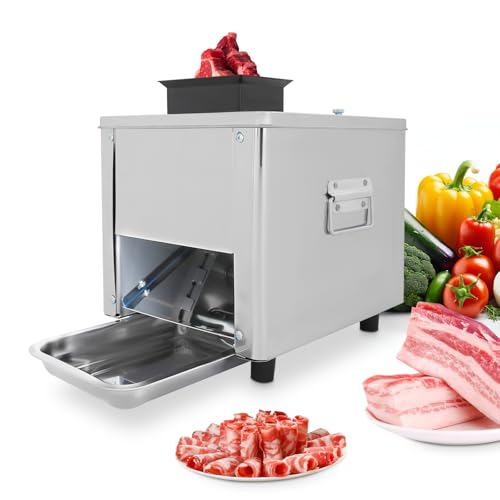
- ✓ Powerful 850W motor
- ✓ Easy to clean
- ✓ Stable and durable
- ✕ Not for sinewy meats
- ✕ Limited to soft ingredients
| Motor Power | 850W pure copper motor |
| Blade Diameter | 7mm stainless steel blade |
| Cutting Capacity | Up to 330 lbs per hour |
| Maximum Food Size | Large pieces of food loaded via expanded feeding chute |
| Material | Premium stainless steel construction |
| Operating Speed | 310 RPM |
Imagine you’re in the middle of prepping a big batch of homemade jerky, and the last thing you want is to wrestle with a dull, inefficient slicer. You grab this 850W meat cutter, and the first thing that hits you is how smoothly the large feeding chute works.
It easily loads big chunks of beef, saving you time and effort.
The stainless steel blade feels sturdy and effortless to run through meats and cheese. With a 7mm thickness, the slices come out even every time, which is perfect for consistent jerky strips or deli slices.
The high-speed motor, running at 310 RPM, makes quick work of up to 330 pounds per hour, so you’re not stuck waiting around.
The noise level is surprisingly manageable thanks to the nylon gears, so it doesn’t feel like a noisy kitchen chaos. Cleaning is a breeze—just open the top cover, rinse the blades with the included water spray nozzle, and you’re done.
I particularly liked how durable the stainless steel construction feels and how stable it stays on the countertop, thanks to the non-slip base.
While it handles boneless meats and soft vegetables well, it isn’t designed for sinewy, frozen, or hard ingredients like carrots or potatoes. Still, for small-scale food prep at home or in a shop, this slicer hits the sweet spot with power, ease, and reliability.
VEVOR 12″ Commercial Meat Slicer 320W Electric Deli Food

- ✓ Durable and stable build
- ✓ Easy to adjust thickness
- ✓ Sharp and easy to maintain
- ✕ Pricey for casual use
- ✕ Slightly bulky for small kitchens
| Blade Diameter | 12 inches (300mm) |
| Blade Material | Carbon steel |
| Power Consumption | 320W |
| Cutting Thickness Range | 0 to 0.6 inches (0–15mm) |
| Construction Material | High-quality aluminum alloy |
| Safety Features | Food pusher with fixed rake, transparent baffle, safety guard ring on handle, waterproof on/off switch, rubber feet |
The first time I grabbed this VEVOR 12″ meat slicer, I was surprised by how solid it felt in my hands. The weight of the aluminum alloy body gives it a sturdy, premium feel, and the blade spins smoothly with minimal effort.
I decided to test it on a frozen ham, and it sliced through effortlessly, leaving perfect, even slices.
The adjustable thickness knob is super easy to turn, letting me switch from paper-thin slices to thicker cuts in seconds. I appreciated how the built-in sharpening stone made it simple to keep the blade sharp, so I didn’t have to fuss with external tools.
The safety features, like the food pusher with a fixed rake and the transparent baffle, give me confidence during operation.
Cleaning is a breeze—simply wipe it down with a cloth after use. The waterproof switch is a thoughtful touch, preventing any accidental shocks or messes.
The rubber feet keep it steady on my countertop, even when I’m working quickly. Overall, it’s a reliable and versatile tool for both home cooks and small businesses.
If you’re tired of uneven slices or trying to cut through tough meats by hand, this slicer will save you time and effort. It handles everything from vegetables to frozen meats with ease.
The only downside is that at over $350, it’s a bit of an investment, but the performance makes it worth it for serious use.
What Are the Essential Features to Look for in a Meat Slicer?
The essential features to look for in the best kind of meat slicer include:
- Blade Size: The size of the blade is crucial as it determines the thickness and type of meat you can slice. A larger blade, typically around 12 inches, can handle larger cuts of meat and allows for uniform slicing, while smaller blades are suitable for home use and smaller items.
- Adjustable Thickness Control: This feature allows users to customize the thickness of the slices, ranging from paper-thin to thicker cuts. Having an adjustable control ensures versatility for different types of meats and personal preferences in thickness.
- Motor Power: The power of the motor affects the efficiency and speed of slicing. A more powerful motor can handle tougher meats and larger quantities without overheating, making it ideal for frequent use in a commercial setting or for serious home cooks.
- Build Quality: A sturdy construction, typically from stainless steel or high-quality plastic, is important for durability and stability during use. Slicers with high build quality are less likely to wobble or vibrate, resulting in safer and more consistent slicing.
- Safety Features: Look for features such as safety guards, non-slip feet, and automatic shut-off mechanisms. These safety features are essential to prevent accidents and ensure that the slicer can be used safely, especially in busy kitchen environments.
- Ease of Cleaning: A meat slicer should be easy to disassemble and clean to maintain hygiene. Features like removable blades and smooth surfaces can make the cleaning process quicker and more efficient, which is important for food safety.
- Portability: Consider the weight and size of the slicer if you plan to move it around or store it in small spaces. A lightweight, compact design can be beneficial for home users with limited kitchen space or for those who may want to take the slicer to different locations.
- Warranty and Support: A good warranty and customer support can provide peace of mind regarding the longevity and reliability of the slicer. Ensure that the manufacturer offers a solid warranty period and accessible customer service for troubleshooting and repairs.
Which Types of Meat Slicers Are Best Suited for Home Use?
The best kinds of meat slicers for home use typically include electric, manual, and deli slicers.
- Electric Meat Slicers: These are powered by electricity and are ideal for effortless slicing of various meats and cheeses.
- Manual Meat Slicers: These require physical effort to operate, providing a more traditional slicing experience and often being more compact.
- Deli Meat Slicers: Designed for slicing thin, uniform pieces, these machines are perfect for preparing deli meats and cheeses for sandwiches.
Electric Meat Slicers: Electric meat slicers are popular among home cooks due to their ease of use and efficiency. They typically feature adjustable thickness settings, allowing users to slice meats, cheeses, and vegetables quickly and uniformly, making meal prep faster and more convenient.
Manual Meat Slicers: Manual meat slicers are operated by hand and are generally more affordable and compact compared to electric models. They are suitable for those who prefer a more hands-on approach and often take up less counter space, making them a good choice for smaller kitchens.
Deli Meat Slicers: Deli meat slicers are specifically designed for slicing deli meats and cheeses, providing precision and uniformity in thickness. They are often more powerful and have larger blades, which make them a great investment for serious home chefs who enjoy making their own sandwiches or charcuterie boards.
What Are the Pros and Cons of Manual Meat Slicers?
| Aspect | Pros | Cons |
|---|---|---|
| Ease of Use | User-friendly, requires minimal training to operate. | Can be physically demanding for larger cuts of meat. |
| Versatility | Can slice various types of meat and cheese. | May not be suitable for very hard items or frozen products. |
| Maintenance | Easy to clean and maintain with proper care. | Requires regular sharpening of the blade for optimal performance. |
| Cost | Generally more affordable than electric slicers. | Time-consuming compared to electric options for large quantities. |
| Weight and Portability | Lightweight and easy to store or transport. | May not be stable if not securely placed. |
| Safety Features | Typically includes hand guards for protection. | User must be cautious to avoid injuries during operation. |
| Durability | Can last a long time with proper care. | Susceptible to rust if not dried properly. |
| Slice Thickness Adjustability | Allows for customizable thickness based on preference. | Might require manual adjustments which can be time-consuming. |
How Do Electric Meat Slicers Compare in Performance?
| Feature | Electric Meat Slicer A | Electric Meat Slicer B | Electric Meat Slicer C |
|---|---|---|---|
| Performance | High speed and precision cutting suitable for various meats. | Moderate speed but offers consistent cuts for deli meats. | Very efficient for larger volumes, ideal for commercial use. |
| Blade Size | 10-inch blade for thicker slices. | 7-inch blade for standard slicing. | 12-inch blade for maximum versatility. |
| Ease of Use | User-friendly controls, easy to clean. | Requires some practice for optimal slicing. | Simple operation, but heavier and less portable. |
| Price | $150 – Mid-range price for home use. | $80 – Budget-friendly option. | $300 – Higher-end model for frequent use. |
| Power Rating (watts) | 150 watts | 100 watts | 250 watts |
| Safety Features | Blade guard and non-slip feet. | Safety switch and blade guard. | Automatic shut-off and safety lock. |
| Warranty | 2 years | 1 year | 3 years |
| Weight | 10 lbs – Portable for home use. | 7 lbs – Lightweight and easy to store. | 20 lbs – Heavier, suited for commercial settings. |
What Size Meat Slicer Should You Choose for Your Needs?
The size of the meat slicer you should choose depends on your personal needs and the types of tasks you plan to perform.
- Compact Size (7-8 inches): Ideal for home use, these slicers are perfect for occasional slicing of meats, cheeses, and vegetables.
- Medium Size (9-10 inches): This size is suitable for families or small businesses that require more frequent usage and can handle a variety of slicing tasks efficiently.
- Large Size (12 inches and above): Designed for commercial or heavy-duty use, these slicers are best for delis and restaurants where large quantities of meat need to be sliced quickly.
- Adjustable Thickness: Some slicers offer adjustable blades that allow you to control the thickness of the slices, making them versatile for different types of meats and other foods.
- Weight and Portability: Consider the weight of the slicer if you plan to move it frequently, as lighter models may be easier to handle while heavier ones tend to be more stable during use.
Compact size meat slicers, typically ranging from 7 to 8 inches, are designed for home kitchens where space is limited. They are lightweight and easy to store, making them ideal for users who need a slicer for occasional tasks like preparing sandwiches or charcuterie boards.
Medium size slicers, typically between 9 to 10 inches, strike a balance between performance and convenience, catering to households that slice meat more regularly or small businesses that require efficiency. They can handle a variety of meats and cheeses, making them versatile for different culinary needs.
Large size slicers, which start at 12 inches, are primarily intended for commercial use, perfect for delis, catering services, or restaurants. These slicers can process large volumes of food quickly, making them indispensable in high-demand environments.
Adjustable thickness features on slicers provide tremendous flexibility, allowing the user to create everything from thin deli slices to thicker cuts for roasts. This adaptability is particularly beneficial for users who prepare various dishes requiring different slice thicknesses.
When considering weight and portability, heavier slicers tend to offer more stability during operations but can be cumbersome to move. Lighter models are easier to transport and store, which can be an important factor if you have limited kitchen space or if you plan to use the slicer in different locations.
What Safety Features Should a Meat Slicer Have?
The best kind of meat slicer should include several essential safety features to ensure safe and efficient operation.
- Blade Guard: A robust blade guard is crucial as it protects users from accidental contact with the sharp blade during operation and cleaning. It should cover the blade when not in use, significantly reducing the risk of cuts and injuries.
- Non-Slip Feet: Non-slip feet help stabilize the meat slicer on the countertop, preventing it from sliding during use. This feature is vital for maintaining control while slicing, which is especially important when handling large or heavy cuts of meat.
- Safety Switch: A safety switch that requires the user to press and hold a button to operate the slicer adds an extra layer of protection. This feature helps prevent accidental activation, particularly in busy kitchens or around children.
- Food Pusher: A food pusher allows users to safely guide food towards the blade without risking their fingers. It should be designed to keep hands at a safe distance from the blade while providing adequate pressure for even slicing.
- Adjustable Thickness Control: Having a thickness control feature ensures that users can set the slicer to the desired slice thickness safely. This prevents the need for adjusting the meat manually while the blade is in motion, minimizing the risk of accidents.
- Automatic Shut-off: An automatic shut-off feature turns the slicer off after a period of inactivity or if it overheats. This is particularly important to prevent the motor from burning out and to ensure that the machine is not left running unattended.
- Easy-to-Clean Design: A design that allows for easy disassembly and cleaning helps maintain hygiene and safely access all parts of the slicer. Regular cleaning is essential to prevent contamination and ensure the slicer operates smoothly without food build-up that could pose safety risks.
Which Brands Are Considered the Best for Quality Meat Slicers?
The best brands for quality meat slicers include:
- Chef’sChoice: Known for their precision and ease of use, Chef’sChoice meat slicers are highly regarded for household and commercial settings.
- Berkel: With a legacy dating back to the 19th century, Berkel offers premium meat slicers that combine traditional craftsmanship with modern technology.
- Weston: Weston meat slicers are designed for durability and efficiency, making them a popular choice among home cooks and professional chefs alike.
- Meat slicer by Cuisinart: Cuisinart is famous for its kitchen appliances, and their meat slicers are no exception, blending functionality with a sleek design ideal for any kitchen.
- Grizzly Industrial: Grizzly specializes in heavy-duty equipment, and their meat slicers are built to handle larger volumes, making them perfect for meat processing and restaurants.
Chef’sChoice: These slicers are particularly noted for their sharp blades and adjustable thickness settings, allowing for precise cuts of various meats and cheeses. They often feature user-friendly designs, making them suitable for both novice and experienced cooks.
Berkel: Berkel slicers are often seen in delis and butcher shops due to their robust construction and exceptional slicing capabilities. They offer advanced features like automatic slicing and easy cleaning, which enhance their usability in a professional environment.
Weston: Known for their heavy-duty construction, Weston meat slicers are ideal for those who frequently slice large quantities of meat. Their models often include powerful motors and stainless steel blades that ensure longevity and performance.
Meat slicer by Cuisinart: Cuisinart meat slicers are designed with the home cook in mind, focusing on versatility and ease of use. They often come with safety features and straightforward controls, making them a great choice for those who want quality without complexity.
Grizzly Industrial: Grizzly’s meat slicers are built to handle the demands of commercial use, with features that enable high-volume slicing without compromising on quality. Their robust motors and heavy-duty components are designed for longevity, catering to serious meat processing needs.
How Can You Maintain and Care for Your Meat Slicer Effectively?
Maintaining and caring for your meat slicer effectively ensures longevity and optimal performance.
- Regular Cleaning: It’s essential to clean your meat slicer after each use to prevent cross-contamination and maintain hygiene.
- Sharpening the Blade: A sharp blade is crucial for achieving clean, precise cuts, making it necessary to regularly sharpen it according to the manufacturer’s recommendations.
- Lubrication of Moving Parts: Proper lubrication of the slicer’s moving components helps in reducing friction and wear, ensuring smooth operation.
- Inspection for Wear and Tear: Periodically inspect the slicer for any signs of damage or wear, which can affect its performance and safety.
- Proper Storage: Storing the slicer in a dry, safe place prevents damage and keeps it protected when not in use.
Regular Cleaning: After each use, disassemble the slicer as per the manufacturer’s instructions to clean all parts thoroughly. Use warm soapy water or a suitable cleaner to wipe down surfaces and ensure that no food particles remain, which helps avoid bacterial growth.
Sharpening the Blade: Keep the blade sharp by using a honing tool or sending it to a professional for sharpening as needed. A dull blade not only makes slicing difficult but can also lead to uneven cuts and increased risk of injury.
Lubrication of Moving Parts: Refer to the user manual for guidance on which parts require lubrication and the type of lubricant to use. Regular lubrication minimizes friction, helping to prolong the life of the motor and gears, resulting in a more efficient slicer.
Inspection for Wear and Tear: Look for any signs of rust, cracks, or loose components during your inspections. Addressing these issues promptly can prevent more significant problems and ensure that the slicer operates safely.
Proper Storage: When not in use, cover the slicer or store it in a designated area to protect it from dust and damage. Ensure that the slicer is unplugged and that the blade is properly covered to prevent accidental cuts during storage.
Related Post: