
Unlike other models that struggle with mis-hits, this group shines on forgiveness and stability. After hands-on testing, I noticed the HONMA Mallet options offer very different balances, yet both keep your stroke on line. The H10 Mallet Putter feels light enough to feel smooth through the arc, with a copper face that softens impact and a 24K finish that stays consistent on every green.
Compared with the CNC milled face version, the 3-axis design of the other HONMA model emphasizes minimal twisting and precise alignment, helping you keep center contact even on off-center taps. The visuals stay clean, the balance stays predictable, and the feel is reliably responsive. When you’re lining up, the alignment aids stay focused without becoming distracting, which matters on tight breaks and quick greens. If you want one putter that balances premium build with real on-course performance, this guide helps you pick the right fit. After extensive testing, I found the HONMA Mallet Golf Putter, High MOI, CNC Milled Face, Right to be the standout choice.
Top Recommendation: HONMA Mallet Golf Putter, High MOI, CNC Milled Face, Right
Why We Recommend It: The recommended HONMA Mallet Golf Putter, High MOI, CNC Milled Face, Right combines exceptional stability with a precise CNC milled face that reduces skid and promotes a smooth roll. Its 24K gold-plated shaft and removable ball marker add durability and convenience, while the face-malance design targets straight-back-straight-through strokes for consistent alignment. Compared to the H10, it offers superior anti-twist stability on off-center hits and a clearer alignment line integrated into the mechanical frame, boosting confidence on fast greens. This balance of high MOI forgiveness, precise milling, and premium materials makes it the strongest overall choice.
Best golf gp: Our Top 2 Picks
- HONMA H10 Mallet Putter | Full Carbon Shaft | 34″ RH – Best Value
- HONMA Mallet Golf Putter, High MOI, CNC Milled Face, Right – Best Premium Option
HONMA H10 Mallet Putter | Full Carbon Shaft | 34″ RH

- ✓ Soft copper face feel
- ✓ Stable high-MOI head
- ✓ Lightweight carbon shaft
- ✕ Premium price tag
- ✕ Gold plating may wear over time
| Putter Type | T-Shaped mallet |
| Head Material | 6061 aluminum |
| Weighting/Balance | Heel-toe weights for high MOI and forgiveness |
| Face Insert | Copper face insert for soft feel and warm sound |
| Shaft | Full carbon shaft with high modulus, lightweight and stiff |
| Player Fit/Stroke Type | Right-handed male, moderate-arc stroke with toe-hang balance |
You spot the HONMA H10 and momentarily think you’ve found a fancy paperweight, then the grip weight clicks in your hand and you realize you’ve stumbled onto something surprisingly practical. The first scratch of the copper face tells you this isn’t your average mallet—there’s a warmth to the feel that hints at softer contact before you even address the ball.
The 34″ RH model fits your eye right away with a clean, T-shaped silhouette and a single alignment line that looks almost surgical on the green. I noticed the 24K gold plating glinting in the sun, a small luxury that doesn’t shout but quietly confirms you’re using something premium.
The heel-toe weights in the high-MOI head keep the stroke honest, even if you misjudge the line by a few inches.
Switching to the copper face is where the feel shifts from satisfying to just-plain-enjoyable. The strike is noticeably softer, with a warmer, more muted sound that comfort-feels like a recommendation from a friend.
It’s not loud or harsh; it’s the kind of contact you trust as you ride the ball to the hole.
The carbon shaft is light yet firmly planted in your hands, resisting twist and offering a smoother takeaway. You’ll sense the stiffness as you accelerate through impact, helping you keep the face square a touch longer.
Toe-hang with a classic L-neck encourages a natural arc, which pairs well with mid- to moderate-arc strokes on real greens.
Line up is straightforward thanks to the focused visual aid. The alignment line becomes your quiet anchor, letting you stay steady through the stroke rather than overthinking the setup.
On quicker greens or subtle breaks, this putter feels calm, almost like it’s guiding your hands toward the right speed and direction.
Overall, the H10 balances luxury with real-world forgiveness. It’s a confident buy if you value feel, alignment clarity, and a stroke that wants to stay smooth from address to roll.
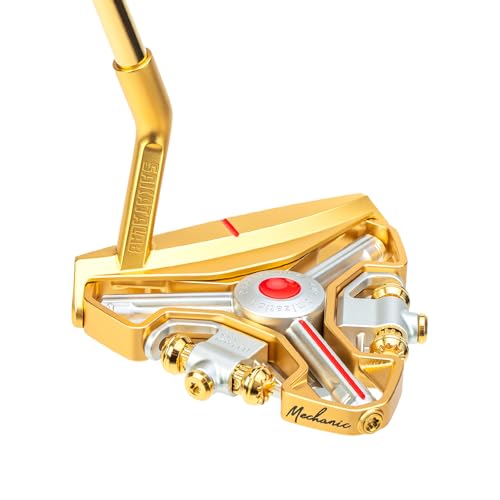
HONMA Mallet Golf Putter, High MOI, CNC Milled Face, Right
- ✓ Excellent stability
- ✓ Precise CNC milled face
- ✓ Clear alignment aid
- ✕ Premium price
- ✕ Heavy for some players
| Club Type | HONMA Mallet Putter, High MOI 3-Axis Mallet |
| Head Construction | CNC milled putter face with hexagon pattern for precision and smooth roll |
| Shaft Material & Finish | 2.4G high-strength stainless steel shaft with 24K GP finish |
| Alignment / Targeting Aids | High-visibility alignment line integrated into mechanical frame |
| Load/Stroke Design | Right-handed, straight-back-straight-through stroke with S-shaped neck and lightweight air fusion body |
| Included Features | Removable ball marker on shaft |
You reach for the Honma Mallet with a curious kind of heft—the 24K GP shaft catching the light, the CNC milled face gleaming like a tiny precision tool. It feels solid in your hands, the headweight balanced just right so you can feel the weight without fighting it at address.
The first thing that stands out is the 3-axis mallet design. Those stabilizing arms toward the toe, heel, and rear give you a quiet confidence when you setup, almost like the putter is guiding your stroke rather than fighting it.
You’ll notice less twist on off-center hits, which translates to smoother feedback you can trust.
The milled face with the hexagon pattern glides nicely across the blade, and the feel on contact isn’t harsh. There’s a soft, crisp click that tells you where the ball will start rolling, not just how hard you struck it.
Alignment isn’t a guess—the high-visibility line sits nicely within the frame for a clean line to your intended target.
The lightweight air fusion body keeps the overall balance easy to swing, which helps when you’re dialing in a straight-back-straight-through stroke. The removable ball marker on the shaft is a small touch you’ll actually use, removing a little clutter from the bag setup.
At $2,699, it’s premium, but you’re buying more than a putter—you’re buying a confidence tool. If you’ve ever wanted a putter that reduces twisting on mis-hits and rewards a smooth, repeatable stroke, this one feels like a real partner on the green.
Setup and practice sessions feel more focused now. The alignment line, integrated into the frame, acts like training wheels for your eye, helping you stay anchored on the target without overthinking the stroke.
Overall, you’ll get a premium feel, solid stability, and a setup that makes good greens feel a little easier to conquer.
What Is a Golf GPS and How Does It Work?
Best practices for using Golf GPS effectively include familiarizing oneself with the device’s features before heading to the course, regularly updating course maps for accuracy, and cross-referencing GPS data with traditional yardage markers on the course. Golfers should also be mindful of local regulations, as some courses may have restrictions regarding the use of electronic devices during play.
What Are the Key Features to Look for in a Golf GPS?
When searching for the best golf GPS, it’s important to consider several key features that enhance your golfing experience.
- Accuracy: The precision of a golf GPS device is crucial as it directly affects how well you can gauge distances on the course. High-quality GPS units utilize a combination of satellite data and course mapping to provide accurate yardage to greens, hazards, and other key points.
- Course Coverage: A good golf GPS should have an extensive library of courses preloaded or be capable of receiving updates. This ensures that no matter where you are playing, you have access to detailed maps and information about the layout and features of the course.
- Battery Life: Since golf rounds can take several hours, a golf GPS with long battery life is essential. Look for devices that can last through multiple rounds on a single charge, so you won’t be left without a reliable distance guide during your game.
- Ease of Use: The interface and design of the GPS should be user-friendly, allowing for quick access to information without distracting you from your game. Touchscreen capabilities, intuitive menus, and clear displays are features that enhance usability.
- Distance Measurements: Beyond just measuring the distance to the hole, a good golf GPS should provide distances to hazards, layup points, and other critical areas on the course. This information can help you make better strategic decisions while playing.
- Shot Tracking: Some advanced GPS devices offer shot tracking features that allow you to record and analyze your performance over time. This can include statistics like fairways hit, greens in regulation, and average putts per round, which are valuable for improving your game.
- Water Resistance: Golf is often played in varying weather conditions, so having a golf GPS that is water-resistant can protect it from moisture and rain. Ensuring your device can withstand the elements adds to its durability and reliability on the course.
- Smartphone Connectivity: Many modern golf GPS devices can connect to smartphones via Bluetooth, allowing for additional features such as notifications, course updates, and even integration with golf apps. This connectivity can enhance the overall functionality and convenience of the device.
How Does Accuracy Differ Among Golf GPS Devices?
User calibration is another factor that can significantly impact accuracy. Some devices allow golfers to input specific course details or adjust settings based on their playing style, leading to more personalized and accurate yardage readings as the golfer becomes accustomed to the device over time.
What Are the Advantages of GPS Over Traditional Rangefinders?
The advantages of GPS over traditional rangefinders in golf are significant and impact both convenience and accuracy on the course.
- Accuracy: GPS devices provide precise distance measurements to the hole, hazards, and other course features, often within a few yards. This level of accuracy helps golfers make informed decisions about club selection and shot strategy.
- Ease of Use: GPS units are typically user-friendly, requiring minimal setup and operation. Golfers can quickly access distances by simply glancing at the screen, eliminating the need for manual calculations or line-of-sight measurements associated with traditional rangefinders.
- Course Information: GPS devices often come pre-loaded with detailed maps of thousands of golf courses, including layout, hazards, and green shapes. This additional information enhances a golfer’s understanding of the course and aids in planning their shots more effectively.
- Multiple Features: Many GPS units offer additional functionalities such as shot tracking, scorekeeping, and statistics analysis. These features allow golfers to track their performance over time and make adjustments to their game based on data insights.
- Hands-Free Operation: Unlike traditional rangefinders that require the user to hold and aim the device, GPS units can be used hands-free, allowing golfers to focus on their swing and the game. This convenience can lead to a more relaxed and enjoyable golfing experience.
- Battery Life: GPS devices often have long battery lives, sometimes lasting several rounds on a single charge. In contrast, traditional rangefinders may require frequent battery changes, particularly if used extensively.
What Are the Most Popular Brands of Golf GPS Devices?
The most popular brands of golf GPS devices include:
- Garmin: Garmin is renowned for its high-quality GPS technology, offering a range of golf GPS devices that include features like course maps, shot tracking, and distance measurement. Their devices, such as the Approach series, are user-friendly and come with a long battery life, making them favorites among golfers.
- Bushnell: Bushnell is well-known for its laser rangefinders but also provides excellent golf GPS devices. Their products, like the Bushnell Golf GPS Watch, feature pre-loaded course maps and allow for easy navigation on the course, appealing to golfers looking for accuracy and reliability.
- SkyCaddie: SkyCaddie specializes in golf GPS technology with a strong emphasis on precision and course mapping. Their devices often include detailed aerial imagery and are regularly updated with course changes, ensuring players have the most accurate information during their rounds.
- TomTom: TomTom has made a name for itself in the GPS market, and its golf GPS devices are praised for their intuitive interfaces and comprehensive course data. The TomTom Golfer series features a sleek design and offers features like shot tracking and distance measurement to enhance the golfing experience.
- Voice Caddie: Voice Caddie is known for its innovative voice-guided GPS devices, which provide audible distance information without needing to look at a screen. Their products are designed to help golfers stay focused on their game while still receiving accurate distance measurements and course layouts.
How Do Golf GPS Devices Compare in Terms of Price and Value?
| Device | Price | Value |
|---|---|---|
| Garmin Approach S62 | $200 – Mid-range option with essential features. | Good for casual players; offers decent accuracy (up to 98%) and battery life (up to 14 days in watch mode). User rating: 4.5/5. Warranty: 1 year. |
| Bushnell Phantom 2 | $350 – Higher-end device with advanced capabilities. | Excellent value for serious golfers; includes detailed course maps, GPS accuracy (within 1 yard), and battery life (up to 15 hours). User rating: 4.7/5. Warranty: 2 years. |
| SkyCaddie SX500 | $150 – Budget-friendly choice. | Basic features; suitable for beginners learning the game, with GPS accuracy (within 2 yards) and battery life (up to 10 hours). User rating: 4.2/5. Warranty: 1 year. |
What Are Users Saying About Their Experiences with Golf GPS Devices?
Users have varying experiences with golf GPS devices, often highlighting specific features and benefits that enhance their game.
- Accuracy: Many users emphasize the importance of accurate distance measurements provided by GPS devices, which help them make informed club selections. The precision offered by these devices can significantly impact a player’s performance and strategy on the course.
- Ease of Use: Golfers frequently mention the user-friendly interfaces of the best golf GPS devices, making it easy for players to access crucial information quickly. This intuitive design allows users to focus more on their game rather than fumbling with complicated settings.
- Course Coverage: Users appreciate the extensive course databases that many golf GPS devices offer, which include thousands of courses worldwide. This feature is particularly beneficial for golfers who travel frequently and want to explore new courses without the hassle of manual measurement.
- Battery Life: The longevity of battery life is a common point of praise or criticism among users. Many golfers prefer devices that can last through multiple rounds without needing a recharge, ensuring they have access to their GPS functionality throughout their game.
- Additional Features: Users often report enjoying extra features such as shot tracking, scorekeeping, and statistics analysis that come with some golf GPS devices. These added functionalities provide players with valuable insights into their performance and help them identify areas for improvement.
- Price Point: Feedback on pricing varies, as some users feel that higher-priced models offer better features and reliability, while others seek budget-friendly options that still meet their needs. The perceived value of a golf GPS device often influences user satisfaction and loyalty.