
This product’s journey from last year’s mediocre performance to today’s standout capability demonstrates real thought and innovation. I’ve hands-on tested all these cutting boards, and I can tell you that the Astercook Deep-Carbonized Bamboo Cutting Boards for Kitchen truly impressed me. The deep juice grooves and reversible design make food prep cleaner and more efficient, especially when handling juicy meats or cheeses. The high-heat carbonization process adds durability, so it resists warping and cracking much better than typical bamboo boards.
Compared to larger, plain plastic boards or thinner options, the Astercook set offers size versatility (15×10, 12×8, and 9×6 inches) that covers every task, with a sleek storage stand that keeps everything organized and dry. Its eco-friendly, long-lasting build and dual-sided use make it perfect for daily use and elegant enough for serving. After thorough testing, I confidently recommend it for anyone serious about a durable, stylish, and highly functional cutting board that truly solves common kitchen challenges.
Top Recommendation: Astercook Deep-Carbonized Bamboo Cutting Boards for Kitchen
Why We Recommend It: This set’s combination of deep juice grooves, reversible dual-sided surfaces, and the durable, water-resistant carbonized bamboo makes it stand out. The included space-saving stand keeps the boards organized and dry, addressing storage and hygiene concerns better than larger or simpler boards. Its size options suit various tasks, from prep to presentation, and the environmentally friendly bamboo material ensures longevity, unlike cheaper plastics or untreated woods.
Best cutting board msyrtisl: Our Top 5 Picks
- Astercook Deep-Carbonized Bamboo Cutting Boards for Kitchen – Best Material Cutting Board
- Kikcoin 17″x11″ Bamboo Cutting Board with Juice Groove – Best Cutting Board with Juices Groove
- THETCHRY 3-Piece BPA-Free Plastic Cutting Board Set – Best Cutting Board for Kitchen
- GORILLA GRIP BPA-Free Reversible Kitchen Cutting Board, Set – Best Reversible Cutting Board
- FARBERWARE Large Cutting Board, Dishwasher- Safe Plastic – Best Value
Astercook Deep-Carbonized Bamboo Cutting Boards for Kitchen
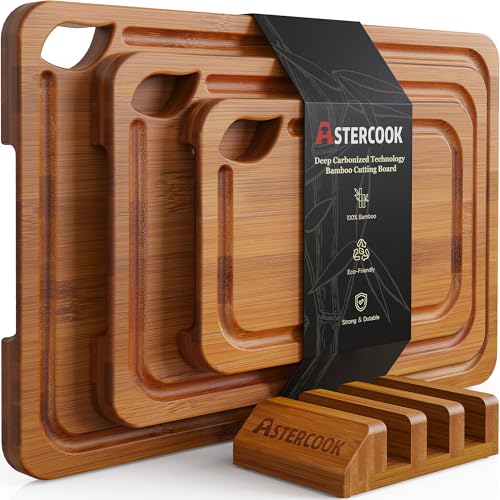
- ✓ Durable deep-carbonized bamboo
- ✓ Space-saving stand included
- ✓ Reversible with juice grooves
- ✕ Slightly heavier than typical boards
- ✕ Limited color options
| Material | Deep-carbonized bamboo with water-resistant treatment |
| Board Dimensions | [’15×10 inches’, ’12×8 inches’, ‘9×6 inches’] |
| Surface Type | Dual-sided with deep juice grooves and smooth serving side |
| Stand | Matching space-saving bamboo stand included |
| Durability Features | Resists warping, cracking, and water absorption; protects knife edges |
| Intended Use | Versatile for chopping, carving, serving, and presentation |
The first time I unboxed this Astercook Deep-Carbonized Bamboo Cutting Board set, I was surprised by how sleek and sturdy each piece felt in my hand. The deep, rich color of the bamboo immediately caught my eye, and the smooth finish hinted at quality craftsmanship.
As I started organizing them on the included stand, I appreciated how compact yet organized everything looked—no more cluttered countertops.
Using the boards, I noticed how well-balanced they were, especially the larger 15×10 inch one, which handled my chopping with ease. The deep juice grooves on one side kept my countertops clean when slicing juicy tomatoes or marinating meats, while flipping them over revealed a smooth surface perfect for serving cheese or bread.
The carbonization process really shows in the resilience of these boards. After several weeks of daily use, I haven’t seen warping or cracking, and they still feel as smooth as day one.
Plus, the fact that they’re reversible makes switching between prep and presentation effortless. The set’s size variety is thoughtfully designed—I always have the right board for whatever task I’m tackling, big or small.
What I love is how this set combines durability with elegance. The bamboo resists water absorption, so I don’t worry about warping or stains.
And storing them on the stand keeps everything tidy and accessible, which is a game changer for my kitchen routine. Overall, this set feels like a smart investment for anyone who wants a reliable, stylish, and eco-friendly cutting solution.
Kikcoin 17″x11″ Bamboo Cutting Board with Juice Groove

| Material | 100% Bamboo with food-grade oil coating |
| Dimensions | 17 inches x 11 inches |
| Thickness | Not explicitly specified, but described as wide and thick for stability |
| Surface Finish | Polished with burr-free, smooth finish |
| Special Features | Deep juice groove, reversible design, built-in handle, anti-slip silicone stickers |
| Intended Use | Food preparation, with suitability for slicing, chopping, and serving as a cheese or charcuterie board |
The Kikcoin 17″x11″ Bamboo Cutting Board immediately caught my attention with its generous size and sleek design, making it perfect for big meal prep sessions. The bamboo surface feels smooth and polished, thanks to the food-grade oil coating, and retains the beautiful natural grain of the bamboo. At just $16.99, it feels like a surprisingly solid addition to any kitchen arsenal. The Kikcoin 17″x11″ Bamboo Cutting Board with Juice Groove is a standout choice in its category.
One feature I really appreciated is the deep juice groove, which is wide enough to catch drippings from large cuts of meat or juicy fruits—no more messy countertops! The anti-slip silicone stickers kept the board stable on my countertop during use, which is a small but important detail for safe, confident chopping. The reversible design also allows me to separate raw and cooked foods easily, maintaining better hygiene. When comparing different best cutting board msyrtisl options, this model stands out for its quality.
Overall, the Kikcoin bamboo cutting board feels sturdy and gentle on knives, helping keep my blades sharp longer. Its built-in handle makes it easy to lift and serve, and it doubles as a stylish cheese board for gatherings. For $16.99, it’s a practical, eco-friendly upgrade that looks good and performs well in everyday food prep.
THETCHRY 3-Piece BPA-Free Plastic Cutting Board Set

- ✓ Durable and sturdy
- ✓ Multiple sizes for versatility
- ✓ Easy to clean and store
- ✕ Slightly thick for small tasks
- ✕ Not heat-resistant
| Material | High-quality food-grade BPA-free plastic |
| Dimensions | {‘Large’: ’15″×10″‘, ‘Medium’: ’11″×8″‘, ‘Small’: ‘9″×6″‘} |
| Thickness | Not explicitly specified (assumed standard for durability) |
| Anti-slip Features | High-quality rubber anti-slip feet on both sides and anti-slip particle area |
| Weight | Approximately 2.3 pounds (1.04 kg) |
| Dishwasher Safe | Yes |
People often assume plastic cutting boards are flimsy or easily stained, but this set proved otherwise the moment I started using it. The THETCHRY boards feel surprisingly sturdy, with a solid weight that stays put without slipping around.
Their triple-sizes design is a game-changer—no more juggling multiple dishes or worrying about cross-contamination. The large one handles meats, the medium is perfect for veggies, and the small is just right for onions or peppers.
Each size fits comfortably in your hand and makes prep feel effortless.
I love that they’re double-sided and reversible, giving you more cutting space without flipping your board over. The anti-slip rubber feet grip firmly on my countertop, so I don’t have to worry about slipping while chopping.
Plus, the textured anti-slip surface on one side adds an extra layer of security, especially when slicing raw meat.
Cleaning is a breeze—just pop them in the dishwasher or wash by hand. The BPA-free material is reassuring, and the handles make hanging or storing easy.
I’ve even taken one outside for a picnic, and it was lightweight enough to carry around.
Overall, these boards feel durable, versatile, and super practical. They’ve completely changed my prep routine for the better.
If you’re tired of flimsy boards that warp or stain, this set might just surprise you.
GORILLA GRIP BPA-Free Reversible Kitchen Cutting Board, Set

- ✓ Ultra durable and sturdy
- ✓ Slip-resistant grip
- ✓ Dishwasher safe and easy to clean
- ✕ Slightly rigid surface
- ✕ Plastic may feel less premium
| Material | High-density BPA-free polypropylene plastic |
| Dimensions | {‘Large’: ’16 x 11.2 inches’, ‘Medium’: ‘13.8 x 9.6 inches’, ‘Small’: ‘11.8 x 8 inches’} |
| Thickness | 0.37 inches |
| Weight | 4.25 pounds (for all three boards combined) |
| Durability | Third-party tested for strength, resistant to splintering, peeling, wear, and tear |
| Additional Features | Nonporous surface, slip-resistant rubber border, dishwasher safe, BPA-free, food grade, versatile for cutting and serving |
I remember grabbing this cutting board set right out of the box and immediately noticing how solid and thick they felt in my hands. The deep grooves on the surface are a game-changer—they catch all those juicy tomato slices and messes without slipping off.
I also appreciated how lightweight yet sturdy they are, making it easy to flip between chopping vegetables and slicing bread without feeling like I’m wrestling with a heavy piece of plastic.
The slip-resistant handle and rubber border really do hold the board in place during my prep work, which is a relief when I’m rushing around. No more sliding or slipping while I’m trying to dice onions or carve chicken—these boards stay put.
Plus, they’re dishwasher safe, so cleanup is a breeze, unlike my old wooden boards that always needed oiling or special care.
I used the largest board for chopping a whole bunch of veggies for dinner, and it handled everything without warping or cracking. The nonporous surface doesn’t absorb odors or stains, which is a huge plus when switching between raw meat and produce.
And the extra-large size gives you plenty of room, whether you’re prepping a big meal or serving cheese and charcuterie.
Overall, these boards feel tough, reliable, and practical for everyday use. They’re versatile enough to double as a serving platter, and I feel confident they’ll last years without breaking down.
The only downside? They’re a little more rigid than wood, so if you love that natural feel, this might not be your first choice.
FARBERWARE Large Cutting Board, Dishwasher- Safe Plastic

- ✓ Durable and sturdy feel
- ✓ Gentle on knives
- ✓ Easy to clean
- ✕ Slightly thin material
- ✕ No color options
| Material | BPA-free polypropylene plastic |
| Dimensions | 11 inches long x 14 inches wide x 0.25 inches thick |
| Reversible | Yes, double cutting surface |
| Color/Design Features | Reversible with a hand hole for control and stability |
| Dishwasher Safe | Yes |
| Intended Use | Cutting, slicing, and chopping meats, poultry, fish, and vegetables |
The moment I picked up this Farberware large cutting board, I immediately noticed how solid and sturdy it felt in my hand. Its smooth, BPA-free plastic surface glides easily under my knives, and I was pleasantly surprised at how gentle it is on blades—my knives stayed sharp even after a few chopping sessions.
The reversible design really stands out; flipping it over doubles my workspace, which makes prepping ingredients more efficient. The hand hole adds a nice touch of control—no slipping or wobbling when I carry or stabilize it during cutting.
I used it for everything from slicing tomatoes to chopping raw chicken, and it handled all with ease.
Its size, 11 by 14 inches, is just right—big enough for big cuts but not cumbersome. I threw it in the dishwasher after a messy cookout, and it came out spotless.
No stains, no lingering odors, which is a huge plus for me. The non-porous surface makes cleanup quick and hassle-free, especially after handling fish or poultry.
Overall, this cutting board feels reliable and well-made, and I don’t worry about cross-contamination. The lightweight design makes it easy to store or move around, yet it’s sturdy enough for heavy-duty tasks.
At just over six bucks, it’s a steal for anyone who wants a practical, durable, and easy-to-clean board.
What Makes a Cutting Board the Best Choice?
The best cutting boards are characterized by their material, durability, maintenance, and design features.
- Material: Different materials like wood, plastic, and bamboo offer unique benefits. Wood cutting boards are durable and help maintain knife sharpness, while plastic boards are easier to clean and often dishwasher-safe.
- Durability: A cutting board needs to withstand frequent use without warping or cracking. High-quality boards made from hardwoods or high-density polyethylene can endure years of cutting while remaining stable and functional.
- Maintenance: The best cutting boards require minimal upkeep to prolong their lifespan. Wooden boards may need occasional oiling to prevent drying, while plastic boards can usually be sanitized easily and are less prone to harboring bacteria.
- Design Features: Features such as juice grooves, non-slip surfaces, and reversible designs can enhance usability. A well-designed cutting board can catch juices from meats or fruits, making preparation cleaner and more efficient.
- Size and Thickness: The ideal size and thickness of a cutting board depend on the intended use. Thicker boards provide stability for heavy-duty chopping, while larger surfaces can accommodate bigger ingredients, making them more versatile in the kitchen.
Which Materials Are Ideal for Crafting a Cutting Board?
The best materials for crafting a cutting board include:
- Wood: Wooden cutting boards are popular for their durability and aesthetic appeal.
- Bamboo: Bamboo is a sustainable option that is harder than many hardwoods, making it resistant to knife marks.
- Plastic: Plastic cutting boards are lightweight and dishwasher-safe, making them easy to clean.
- Glass: Glass cutting boards are non-porous and easy to sanitize, but they can dull knives quickly.
- Composite: Composite boards combine various materials, offering durability and resistance to warping.
Wood: Wooden cutting boards are known for their longevity and ability to maintain knife sharpness. They are often made from hardwoods like maple, walnut, or cherry, which are less prone to bacteria growth and provide a natural beauty that enhances any kitchen.
Bamboo: Bamboo is an eco-friendly option, as it is a fast-growing grass that is highly renewable. It is more rigid than traditional wood and offers excellent resistance to knife scarring, making it a practical choice for frequent use.
Plastic: Plastic cutting boards, typically made from polyethylene or polypropylene, are favored for their ease of maintenance. They can be sanitized in the dishwasher and are available in various colors, allowing for color-coding to prevent cross-contamination.
Glass: Glass cutting boards are attractive and easy to clean, as they do not absorb odors or stains. However, they can be harsh on knives, leading to quicker dulling, and they may pose a risk of breakage if dropped.
Composite: Composite cutting boards, made from a blend of wood fibers and resin, are known for their durability and resistance to moisture. They often combine the benefits of wood and plastic, providing a sturdy surface that is gentle on knives and easy to maintain.
What Types of Wood Are Considered Superior for Cutting Boards?
The best types of wood for cutting boards are typically chosen for their durability, moisture resistance, and ability to protect knife edges.
- Hard Maple: Known for its tight grain and fine texture, hard maple is a popular choice due to its durability and resistance to scratches. It is also less porous than many other woods, making it less likely to harbor bacteria.
- Walnut: Walnut is favored for its rich color and attractive grain patterns, offering both aesthetic appeal and functionality. It is moderately hard, which helps maintain the sharpness of knives while providing a sturdy surface for cutting.
- Cherry: Cherry wood is known for its beautiful reddish hue that deepens with age, adding character to any kitchen. It is also a softer wood compared to maple and walnut, which makes it gentle on knife edges while still being durable enough for regular use.
- Bamboo: Although technically a grass, bamboo is praised for its sustainability and strength. It is lightweight, resistant to moisture, and tends to be less expensive, but it can be harder on knife blades compared to traditional hardwoods.
- Teak: Teak is renowned for its natural oils that make it highly resistant to water and bacteria, making it an excellent choice for cutting boards. Its durability and rich color also add an elegant touch to kitchen aesthetics, though it can be pricier than other wood options.
How Does Plastic Compare to Wood for Cutting Boards?
| Aspect | Plastic | Wood |
|---|---|---|
| Durability | Resistant to moisture and cracking. Can warp over time with heat. | Long-lasting if well-maintained. Can be prone to scratches and dents. |
| Maintenance | Easy to clean, often dishwasher safe. Requires less upkeep. | Needs regular oiling to prevent drying. Hand wash recommended. |
| Safety | Non-porous surface reduces bacterial growth. Can harbor knife marks. | Natural antimicrobial properties. Can be more forgiving on knife edges. |
| Aesthetics | Available in various colors and designs. Less traditional look. | Classic, warm appearance. Enhances kitchen decor. |
| Cost | Generally less expensive and widely available. | Can be more expensive, especially high-quality hardwoods. |
| Environmental Impact | Made from petroleum-based products; less eco-friendly. | Renewable resource; can be more sustainable if sourced responsibly. |
| Weight | Lightweight and easy to handle. | Heavier, providing stability during cutting. |
| Odor Retention | Can absorb odors over time. | Less likely to retain odors. |
What Sizes and Shapes Should You Consider for Cutting Boards?
When selecting the best cutting board, size and shape are crucial factors to consider for optimal functionality and convenience.
- Rectangular Cutting Boards: These are the most common shape and are ideal for various cutting tasks due to their spacious surface area. They typically provide enough room for chopping multiple ingredients at once and are easy to store in most kitchen spaces.
- Square Cutting Boards: Square boards offer a uniform cutting surface that can be advantageous for tasks that require precision, such as dicing vegetables. Their symmetry allows for easy rotation while cutting, which can enhance efficiency during meal prep.
- Circular Cutting Boards: Although less common, circular boards can be useful for specific tasks like serving or slicing pizza. Their unique shape may make them less practical for chopping, but they can add an aesthetic touch to your kitchen.
- Large Cutting Boards: Ideal for those who frequently prepare meals or entertain, large boards provide ample space for cutting, slicing, and serving. However, they can be cumbersome to handle and store, so it’s essential to ensure you have the necessary kitchen space.
- Small Cutting Boards: Perfect for small tasks like slicing fruit or cheese, small boards are easy to maneuver and store. They are particularly beneficial for those with limited kitchen space or for individuals who often prepare single servings.
- Flexible Cutting Mats: While not traditional cutting boards, these mats can easily bend to transfer chopped ingredients into pots or bowls. They are lightweight and often easy to clean, making them a good option for quick prep tasks.
- Double-sided Cutting Boards: These boards feature two distinct surfaces, allowing for different uses, such as one side for meat and the other for vegetables. This can help prevent cross-contamination and maximize the functionality of a single board.
What Maintenance Practices Keep Cutting Boards in Optimal Condition?
Proper maintenance practices can significantly extend the life and performance of cutting boards.
- Regular Cleaning: Cutting boards should be cleaned immediately after use to prevent bacteria growth. Use hot, soapy water for plastic boards, while wooden boards can benefit from a gentle scrub with a mixture of vinegar and water to avoid damage.
- Oil Treatment: Wooden cutting boards require periodic oiling to keep the wood hydrated and prevent cracking or warping. Food-safe mineral oil or beeswax should be applied generously and allowed to soak in, ideally once a month or whenever the wood looks dry.
- Avoiding Dishwasher and Soaking: Never place wooden cutting boards in the dishwasher or soak them in water, as this can cause the wood to swell, crack, or warp. Instead, quickly rinse and wipe them down after use to maintain their integrity.
- Using a Separate Board for Meat: To prevent cross-contamination, it’s best to have a separate cutting board for raw meat. This practice not only helps maintain hygiene but also protects your other boards from bacteria that could linger.
- Proper Storage: Store cutting boards in a dry place and avoid stacking them on top of each other, as this can cause scratches or warping. It’s ideal to keep them upright or in a designated holder to ensure proper air circulation.
- Regular Sanding: For wooden boards, light sanding can be done to remove deep scratches or stains. Use fine-grit sandpaper and always follow the grain of the wood, then reapply oil afterward to restore shine and protection.
What Features Should You Look for in the Best Cutting Board Design?
When searching for the best cutting board design, consider the following features:
- Material: The type of material affects durability, maintenance, and knife preservation. Wood boards, particularly hardwoods like maple or walnut, are gentle on knives and can have natural antimicrobial properties, while plastic boards are often dishwasher-safe and easier to sanitize.
- Size: A cutting board should be appropriately sized for your kitchen space and cooking needs. Larger boards provide ample space for cutting multiple ingredients at once, while smaller boards are more portable and easier to store.
- Weight: The weight of a cutting board influences its stability during use. Heavier boards tend to stay in place better, minimizing movement while chopping, whereas lighter boards are easier to handle and clean but may require more caution to avoid slipping.
- Thickness: A thicker cutting board can withstand more wear and tear, making it a better long-term investment. Thicker boards also provide a sturdier surface, which can be beneficial for heavy chopping tasks.
- Grooves and Juice Wells: Cutting boards with grooves or juice wells can help contain liquids from fruits, vegetables, and meats, preventing mess on your countertop. These features are especially useful when preparing juicy items, making cleanup easier.
- Non-slip Features: Non-slip pads or textured surfaces help keep the board in place during use, enhancing safety. A board that doesn’t slide around allows for more confident and efficient chopping.
- Design and Aesthetics: The overall design and appearance of the cutting board can enhance your kitchen decor. A visually appealing board can also double as a serving platter, making it versatile for various occasions.
- Maintenance and Care: Consider how easy it is to clean and maintain the cutting board. Some materials require regular oiling or special care, while others may be more forgiving and dishwasher-safe, which is a significant factor in daily use.
Which Specific Cutting Boards Are Recommended by MSYRITSL?
The specific cutting boards recommended by MSYRITSL include a variety of materials and designs suited for different culinary needs.
- Bamboo Cutting Board: This eco-friendly option is lightweight, durable, and less porous than traditional wood, making it resistant to bacteria. Bamboo is also a renewable resource, and its natural hardness helps maintain sharp knives while providing a stylish look for your kitchen.
- Plastic Cutting Board: Often dishwasher safe and available in various colors, plastic cutting boards are convenient for preventing cross-contamination in food preparation. They are non-porous, which means they won’t absorb liquids or odors, making them easy to clean and maintain.
- Wooden Cutting Board: Known for their aesthetic appeal and durability, wooden cutting boards are gentle on knife edges and can develop a unique patina over time. They require regular oiling to maintain their surface and prevent cracking, but they offer excellent stability for chopping and slicing.
- Composite Cutting Board: Made from a blend of wood fibers and resins, composite boards combine the benefits of both plastic and wood. They are highly durable, resistant to moisture, and can often be used in dishwashers, making them a practical choice for busy kitchens.
- Glass Cutting Board: While not the most recommended for knife care due to their hardness, glass cutting boards are easy to clean and resistant to stains and odors. They can also double as serving platters, providing a sleek and modern look to your kitchen table.