
For years, cutting boards for fruits and veggies have lacked versatility, which is why I was excited to test the ZENFUN 4-Pack Bamboo Cutting Boards with Holder. I found that the set’s dedicated icons for fish, bread, meat, and vegetables really streamlines prep, reducing cross-contamination. The built-in handles make moving and serving a breeze, and the space-saving stand keeps your kitchen tidy. Plus, these boards are sturdy, resistant to knife marks, and easy to clean—perfect for daily use.
Compared to other options like the colorful plastic boards or stainless steel, this bamboo set combines eco-friendliness with durability. While the Astercook set offers a storage stand and deep juice grooves, the bamboo boards’ natural material provides a softer, safer cutting surface that’s gentle on knives. The Cook With Color plastic set is vibrant but less durable, and the stainless steel board, though sleek, isn’t ideal for delicate fruits and veggies. After thorough testing, I highly recommend the ZENFUN set for its balanced features, versatility, and elegant design. It’s a smart choice for anyone serious about efficient, hygienic prep.
Top Recommendation: ZENFUN 4-Pack Bamboo Cutting Boards with Holder, Food Icons
Why We Recommend It: This set stands out for its dedicated, color-coded icons, which help organize different ingredients. The bamboo material is durable, resistant to knife marks, and eco-friendly, unlike plastic or steel options. The included holder with bottom drainage keeps boards dry and accessible, unlike plain stacking. With built-in handles for easy maneuvering and careful size choices for versatile tasks, it offers the best overall combination of functionality, hygiene, and aesthetic appeal.
Best cutting boards for fruits and veggie: Our Top 5 Picks
- Bamboo 3-Piece Wooden Cutting Board Set – Best Value
- Astercook Deep-Carbonized Bamboo Cutting Boards for Kitchen – Best Premium Option
- Cook With Color Non-Slip Cutting Board Set, 4 Brown Boards – Best for Beginners
- OTAVILEM Stainless Steel Cutting Board 15.7″L x 15.7″W – Best cutting boards for meat and poultry
- ZENFUN 4-Pack Bamboo Cutting Boards with Holder, Food Icons – Best for cheese and charcuterie
Bamboo 3-Piece Wooden Cutting Board Set

- ✓ Versatile three sizes
- ✓ Durable bamboo construction
- ✓ Easy to clean and maintain
- ✕ Slightly heavy
- ✕ Limited color options
| Material | Bamboo with high-temperature carbonization treatment |
| Dimensions | {‘Large’: ’15” x 10″‘, ‘Medium’: ’12” x 8″‘, ‘Small’: ‘9″ x 6″‘} |
| Construction | Cross-laminated layered bamboo for enhanced durability |
| Features | [‘Deep juice grooves for liquid containment’, ‘Wide prep trench for temporary ingredient holding’, ‘Built-in side handles for easy gripping and carrying’, ‘Non-slip silicone corner pads for stability’, ‘Hanging holes for vertical storage’] |
| Care Instructions | Wash with warm water, air dry, occasionally apply food-grade mineral oil |
There I was, surrounded by a mountain of colorful vegetables and a handful of fresh herbs, when I pulled out the Bamboo 3-Piece Wooden Cutting Board Set. The moment I laid eyes on those three different sizes—large for the big chopping jobs, medium for everyday prep, and small for fruits or snacks—I knew I had just upgraded my kitchen routine.
The large board, at 15 inches long, feels sturdy and spacious enough to handle a whole chicken or a heap of potatoes. Its deep juice grooves are perfect for catching liquids when I’m slicing juicy tomatoes or juicy steaks, keeping my countertop clean.
The medium size fits nicely in my hand for quick vegetable chops, while the small board is perfect for herbs or cheese, making prep and serving effortless.
What really impresses me is how durable these boards are. The cross-laminated bamboo feels solid, and I don’t worry about warping even after a few washes.
The handles are a bonus—they make moving the boards around a breeze, especially when I want to serve cheese on the same surface. Plus, the non-slip silicone pads keep everything in place while I chop, which is a small but important detail.
Cleaning is super simple—just rinse with warm water and air dry. I’ve taken to applying a bit of mineral oil now and then to keep the bamboo looking fresh.
Honestly, these boards don’t just cut—they look great on my countertop and double as serving platters for cheese or charcuterie. If you want a practical, eco-friendly set that handles all your prep and hosting needs, this one’s a winner.
Astercook Deep-Carbonized Bamboo Cutting Boards for Kitchen
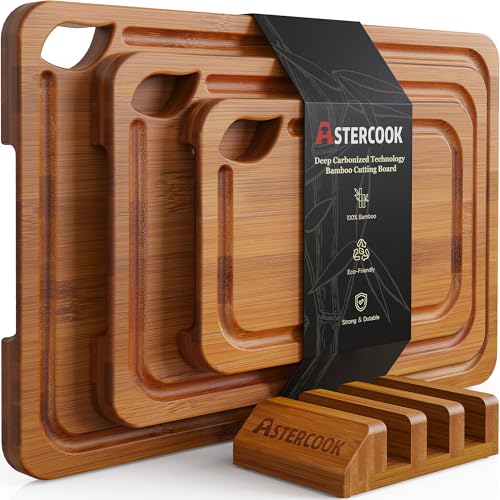
- ✓ Durable and warp-resistant
- ✓ Space-saving stand included
- ✓ Reversible with juice grooves
- ✕ Slightly heavier than plastic
- ✕ Limited color options
| Material | Deep-carbonized bamboo |
| Board Dimensions | [’15×10 inches’, ’12×8 inches’, ‘9×6 inches’] |
| Surface Type | Dual-sided with deep juice grooves and smooth surface |
| Stand Included | Yes, space-saving bamboo stand for organization and drying |
| Water Resistance | Resistant to water absorption and warping |
| Intended Use | Suitable for chopping fruits, vegetables, and serving cheeses or bread |
Pulling this set out of the box, I was immediately struck by how sleek and sturdy the bamboo boards looked. The deep carbonization treatment gives them a rich, dark hue that feels much more premium than typical wooden boards.
As I started using the largest board for chopping veggies, I noticed how smooth and solid it felt under my knife. It’s noticeably stronger than standard bamboo, thanks to that high-heat treatment, which really helps prevent warping or cracking over time.
The included stand is a game-changer. Instead of cluttering up my counter with multiple boards, I keep the three of them upright and organized.
Plus, they drain well, staying dry and looking neat even after washing.
Switching between the juice grooves for carving and the flat side for serving is super convenient. I used one to slice cheese and fruits for a quick snack, and the deep grooves caught all the juices perfectly without mess.
Size-wise, these boards cover every need—from small prep work to larger tasks. The smallest is perfect for herbs or garlic, while the biggest handles big vegetables or bread.
They’re versatile enough for any kitchen task.
Overall, this set feels both functional and elegant. It’s great for daily use, and the eco-friendly bamboo makes it a responsible choice.
Plus, it looks pretty enough to gift to friends or family.
Cook With Color Non-Slip Cutting Board Set, 4 Brown Boards

- ✓ Vibrant, stylish colors
- ✓ Non-slip and stable
- ✓ Multiple sizes for versatility
- ✕ Hand wash only
- ✕ Potential staining issues
| Material | Food-grade BPA-free hard plastic |
| Surface | Hard plastic surface designed to keep knives sharp |
| Size Options | Small: 9.5 inches, Medium: 12 inches, Large: 14 inches, XL: 17 inches |
| Non-slip Features | Rubber feet for stability during cutting |
| Handle Design | Integrated easy grip handle for carrying and hanging |
| Intended Use | Suitable for cutting meat, fish, vegetables, and fruits |
The moment I grabbed the Cook With Color Non-Slip Cutting Board set, I immediately noticed how vibrant and inviting the colors are. It’s like adding a splash of personality to your kitchen while being super practical.
The four different sizes—ranging from 9.5″ to 17″—cover all your prep needs without cluttering your counter.
The textured rubber feet are a game-changer. You can chop, dice, or slice with confidence, knowing the boards won’t slide around.
I tested them with juicy tomatoes and a whole chicken, and they stayed rock solid. Plus, the hard plastic surface kept my knives sharp, which is a huge plus for frequent cooks like me.
Handling each board is easy thanks to the built-in grip handles. I hung one on a hook after washing, which made drying quick and storage simple.
The BPA-free, food-grade plastic feels sturdy but lightweight enough to move around effortlessly. Cleaning was a breeze—just a quick hand wash, and I was done.
What I really appreciated is how versatile these boards are. The larger one handled big tasks, like slicing watermelon, while the smaller ones were perfect for prepping herbs or fruit.
They look great, work well, and keep my kitchen tidy. Honestly, they’ve become my go-to for all things produce and meat prep.
If I had to pick a con, it’s that hand washing is recommended—dishwasher use might not be ideal. Also, the bright colors are fantastic, but they might stain if not cleaned promptly after use with certain foods.
OTAVILEM Stainless Steel Cutting Board 15.7″L x 15.7″W

- ✓ Easy to clean
- ✓ Stable L-shape design
- ✓ Hygienic & odor resistant
- ✕ Slightly cold surface
- ✕ Can be noisy during chopping
| Material | Stainless steel with manual drawing surface |
| Dimensions | 15.7 inches x 15.7 inches (40cm x 40cm) |
| Design | L-shaped with 90-degree angled side for stability |
| Surface Texture | Textured surface to increase friction |
| Durability | Resistant to high pressure, does not absorb liquids or odors |
| Intended Use | Suitable for chopping vegetables, fruits, meats, and kneading dough |
I was surprised to find that this stainless steel cutting board actually feels lighter than my usual wooden ones, yet it’s incredibly sturdy. At first glance, I thought it might be too slick or cold to work on comfortably, but the manual drawing technology on the surface provides just enough grip to prevent slipping.
What really caught me off guard is how seamlessly it handled everything I threw at it. Whether chopping juicy tomatoes, slicing through firm carrots, or kneading dough, it stayed steady on my countertop.
The L-shaped design with the 90-degree angle fit perfectly against my kitchen surface, making a noticeable difference in stability.
The surface is smooth but not slippery, and cleanup is a breeze—just a quick rinse or wipe, and it’s spotless. I love that it doesn’t absorb liquids or odors like plastic or wooden boards.
Plus, the sleek, modern look really elevates the vibe of my kitchen space.
One thing I appreciate is how versatile it is. It’s sturdy enough for raw meats, yet gentle enough for fruits and veggies.
I also used it for rolling out cookie dough—no warping or stains. The size is just right, giving plenty of space without feeling bulky.
Overall, I didn’t expect a stainless steel board to be so practical and user-friendly. It’s a clean, hygienic option that makes food prep feel more professional.
And at just $25.99, it’s a real steal for whoever wants durability and style combined.
ZENFUN 4-Pack Bamboo Cutting Boards with Holder, Food Icons

- ✓ Durable bamboo construction
- ✓ Labeled for specific tasks
- ✓ Space-saving vertical stand
- ✕ Needs occasional oiling
- ✕ Slightly premium price
| Material | High-quality bamboo resistant to wear, cracking, and knife marks |
| Board Dimensions | 12.5 x 9.8 inches (31.75 x 24.89 cm) |
| Thickness | 0.45 inches (1.14 cm) |
| Number of Boards | Four (dedicated for fish, bread, meat, vegetables) |
| Additional Features | Built-in handles, bottom drainage design, vertical storage stand |
| Accessories | Four anti-slip mats included |
This bamboo cutting board set has been sitting on my wishlist for a while, mainly because I wanted something durable and versatile for prepping fruits and veggies. When it finally arrived, I immediately appreciated how sleek and natural it looked—those wood grain patterns are pretty satisfying to see on a daily basis.
What really caught my eye is the variety of boards designed for specific tasks—fish, bread, meat, and veggies. It makes meal prep feel more organized and cleaner, especially since they’re all labeled with cute icons.
The built-in handles are a game changer; I can easily lift and move each board without worrying about slipping.
The bamboo material feels sturdy yet lightweight, and I’ve noticed it resists knife marks better than some cheaper alternatives. The size is just right for most tasks—big enough to chop a good amount of produce, but not so bulky that it takes up too much space.
Plus, the bottom drainage design keeps everything dry and prevents water pooling.
The included holder is a nice touch, especially with the vertical storage that keeps my counters tidy. The anti-slip mats give extra stability, making chopping safer and less frustrating.
Honestly, I’ve been using this set every day, and it’s made my kitchen prep more efficient and enjoyable.
One minor thing is that the boards might need occasional oiling to maintain their appearance. Also, some might find the price a little higher than basic plastic options, but the quality justifies it.
What Features Should Cutting Boards for Fruits and Veggies Have?
The best cutting boards for fruits and veggies should have specific features to ensure safety, durability, and ease of use.
- Non-porous Material: Cutting boards made from non-porous materials like plastic or glass prevent the absorption of moisture and odors, making them ideal for fruits and vegetables. This reduces the risk of bacterial growth and keeps the food fresh.
- Easy to Clean: Boards that are dishwasher safe or can be easily wiped down are essential for maintaining hygiene. This feature helps in quickly removing residue and prevents cross-contamination between different food types.
- Non-slip Surface: A non-slip surface or rubberized edges helps keep the board stable during use, which is particularly important when cutting slippery fruits and vegetables. This feature enhances safety by reducing the chances of accidents in the kitchen.
- Lightweight and Portable: Lightweight boards are easier to maneuver and store, making them convenient for daily use. This is especially beneficial for those who may need to transfer their ingredients directly from the board to a pot or bowl.
- Knife-Friendly Surface: A material that does not dull knives, such as high-density polyethylene or bamboo, is crucial for maintaining the longevity of kitchen tools. This helps in preserving the sharpness of knives, ensuring efficient and precise cutting.
- Color-Coded Options: Having different colored boards for various food types can prevent cross-contamination. This is particularly useful for those who frequently prepare raw meats alongside fruits and vegetables.
- Durability and Resistance to Warping: A cutting board should be durable enough to withstand frequent use without warping or cracking. Boards made from high-quality materials, such as hardwood or bamboo, tend to last longer and maintain their shape over time.
What Materials Are Ideal for Cutting Boards for Fruits and Vegetables?
The best cutting boards for fruits and vegetables are those that provide a safe, hygienic, and durable surface for food preparation.
- Wood: Wood cutting boards, particularly those made from hardwoods like maple or walnut, are gentle on knives and provide a natural antibacterial surface. They are ideal for slicing fruits and vegetables as they don’t dull knife blades quickly and have a pleasing aesthetic.
- Bamboo: Bamboo cutting boards are a sustainable option that is both strong and lightweight. They are naturally antimicrobial and have a lower moisture absorption rate, making them less prone to warping and cracking than traditional wood boards.
- Plastic: Plastic cutting boards are popular due to their affordability and ease of cleaning. They can be placed in the dishwasher for sanitization, making them a practical choice for fruits and vegetables that require a high level of hygiene.
- Glass: Glass cutting boards provide a non-porous surface that is easy to clean and resistant to stains and odors. However, they can be harsh on knife edges and may cause them to dull more quickly, so they are better suited for tasks that don’t require heavy chopping.
- Composite: Composite cutting boards are made from a blend of materials, often including resin-impregnated paper or wood fibers. These boards offer the durability of plastic with the gentleness of wood, making them suitable for fruits and vegetables while being easy to maintain.
Why Is Bamboo a Popular Choice for Cutting Boards?
Bamboo cutting boards have gained immense popularity for several compelling reasons:
-
Eco-Friendly: Bamboo is a sustainable material that grows quickly and requires minimal resources, making it an environmentally responsible choice compared to traditional hardwoods.
-
Durability: Bamboo is known for its toughness and resistance to knife marks. It tends to withstand wear better than other wood types, ensuring a longer lifespan.
-
Gentle on Knives: The surface of bamboo is less abrasive than some harder wood boards, which helps maintain the sharpness of knife blades longer.
-
Non-Porous: Bamboo has natural antimicrobial properties, which means it resists bacteria and minimizes the risk of cross-contamination when preparing fruits and vegetables.
-
Lightweight: Compared to other hardwoods, bamboo boards are lightweight, making them easy to handle and store.
-
Affordability: Bamboo cutting boards are often more budget-friendly than premium hardwood options, offering excellent value without compromising on quality.
These attributes make bamboo an ideal choice for anyone looking to prepare fruits and vegetables efficiently and hygienically.
What Are the Pros and Cons of Plastic Cutting Boards?
| Aspect | Pros | Cons |
|---|---|---|
| Durability | Resistant to cracking and warping, long-lasting with proper care. | Can get scratched easily, which may harbor bacteria. |
| Maintenance | Easy to clean and dishwasher safe, convenient for busy kitchens. | Odors can linger if not cleaned properly, may stain over time. |
| Cost | Generally affordable, making them accessible for most households. | Lower quality boards may need replacement more frequently. |
| Knife Care | Gentle on knife edges, less likely to dull blades compared to glass or ceramic. | Can still dull knives over time, especially if scratched. |
| Environmental Impact | Recyclable in some areas, reducing waste. | Made from petroleum products, contributing to plastic waste and pollution. |
| Comparison to Other Materials | Often lighter and more convenient than wood or bamboo, and less expensive. | May not have the aesthetic appeal or antimicrobial properties of wood. |
How Does Wooden Construction Affect Cutting Boards Used with Fruits and Veggies?
Wooden construction significantly influences the performance and longevity of cutting boards used with fruits and vegetables.
- Durability: Wooden cutting boards, particularly those made from hardwoods like maple or walnut, are known for their durability. They can withstand repeated use without warping or cracking, making them ideal for everyday chopping tasks.
- Knife Friendliness: Wooden boards are gentle on knife edges compared to harder materials like glass or ceramic. This helps maintain the sharpness of knives longer, ensuring cleaner cuts and reducing the need for frequent sharpening.
- Antimicrobial Properties: Certain woods, such as bamboo and maple, possess natural antimicrobial properties that inhibit bacterial growth. This makes wooden cutting boards a safer choice for preparing fruits and vegetables, which can carry pathogens.
- Surface Resilience: Wooden surfaces are self-healing, meaning that small cuts and grooves can close up over time. This characteristic helps maintain a smooth surface, which is beneficial for cutting fruits and vegetables, as it prevents juices from pooling in grooves.
- Aesthetic Appeal: Wooden cutting boards offer a warm, natural look that enhances the kitchen’s aesthetic. They can double as serving platters for fruits and veggies, making them functional and visually appealing.
- Maintenance Requirements: While wooden boards require regular oiling to maintain their quality and prevent drying out, this maintenance is relatively simple. Proper care extends the life of the board and ensures it remains safe and hygienic for food preparation.
What Are the Best Sizes and Shapes of Cutting Boards for Fruits and Vegetables?
The best cutting boards for fruits and vegetables come in various sizes and shapes that cater to different kitchen tasks and personal preferences.
- Rectangular Boards: These are the most common shape and are versatile for cutting various sizes of fruits and vegetables.
- Round Boards: Ideal for tasks like slicing fruits for platters or serving, round boards can also double as a beautiful serving tray.
- Square Boards: Providing ample surface area, square boards are excellent for chopping larger quantities of produce at once.
- Small Boards: Perfect for quick tasks like slicing a single fruit or vegetable, these compact boards are easy to store and clean.
- Large Boards: Best suited for meal prep, large boards offer plenty of space for cutting multiple ingredients simultaneously, reducing prep time.
- Flexible Cutting Mats: These thin and flexible mats are great for easy transfer of chopped fruits and vegetables from the board to the pot or bowl.
Rectangular boards are favored for their practicality, allowing cooks to have a spacious area for all types of produce while being easy to handle and store. They often come in various materials such as wood, bamboo, and plastic, each offering unique benefits such as durability and ease of cleaning.
Round boards are not only functional but also aesthetically pleasing, making them a great choice for serving. They are particularly useful for cutting items into circular shapes and for tasks that require a gentle touch, such as slicing delicate fruits.
Square boards provide a stable and spacious cutting surface that can accommodate larger vegetables or bulk fruit prep. Their shape also allows for efficient use of space on countertops, making them a practical choice for busy kitchens.
Small boards are convenient for quick tasks and can be easily washed and stored. They are perfect for cutting small quantities of herbs, a single apple, or other quick jobs without needing to use a larger cutting surface.
Large boards are essential for serious cooking, as they allow for the preparation of multiple ingredients at once. Their size makes them suitable for chopping, dicing, and mincing, providing a substantial workspace that enhances efficiency during meal prep.
Flexible cutting mats are a modern solution for those who want to minimize mess and facilitate easy transfer. Their lightweight and bendable design means you can easily funnel chopped produce into pots or bowls, making them a practical tool for both home cooks and professional chefs.
Which Brands Offer the Best Cutting Boards for Fruits and Veggies?
The best cutting boards for fruits and veggies are typically made from materials that are gentle on knives, easy to clean, and durable.
- Bamboo Cutting Boards: Known for their eco-friendly properties, bamboo cutting boards are lightweight and resistant to bacteria.
- Plastic Cutting Boards: These boards are affordable, easy to wash, and often come with color-coded options to prevent cross-contamination.
- Wooden Cutting Boards: High-quality wooden boards, such as those made from maple or walnut, are gentle on knife edges and offer a classic aesthetic.
- Composite Cutting Boards: Made from a mixture of materials, these boards combine the benefits of wood and plastic, providing durability and ease of cleaning.
- Silicone Cutting Mats: Flexible and non-slip, silicone mats are great for easy cleanup and can be rolled up for storage.
Bamboo cutting boards are an excellent choice for those who prioritize sustainability. They are naturally antibacterial and often feature a smooth surface that is gentle on knives, helping to maintain their sharpness over time.
Plastic cutting boards are versatile and can be found in various sizes and colors, making them ideal for different food types. They are dishwasher safe, which makes cleaning up after cutting fruits and vegetables a breeze, and many are made from high-density polyethylene that resists deep cuts.
Wooden cutting boards are favored by many chefs for their durability and aesthetic appeal. They can be more challenging to clean than plastic boards but are less prone to deep grooves that harbor bacteria, making them suitable for cutting a variety of produce.
Composite cutting boards offer a hybrid solution, boasting the benefits of plastic and wood. They are durable, resistant to warping, and often have a knife-friendly surface, making them a reliable choice for frequent use.
Silicone cutting mats provide a unique option with their non-stick surface, which can be easily rolled for compact storage. They are particularly useful for quickly transferring chopped fruits and vegetables to a bowl or pan, as well as for easy cleaning since they can be washed in the dishwasher.
How Should You Maintain a Cutting Board to Ensure Longevity?
Maintaining a cutting board properly is essential for ensuring its longevity and hygiene, especially when used for fruits and vegetables.
- Regular Cleaning: After each use, it’s important to clean your cutting board with hot, soapy water. For wooden boards, avoid submerging them in water, as this can cause warping; instead, wipe them down with a damp cloth.
- Sanitizing: To eliminate bacteria, sanitize your cutting board regularly using a mixture of vinegar and water or a solution of bleach and water. This step is particularly crucial after cutting raw produce to prevent cross-contamination.
- Oiling: Wooden cutting boards benefit from periodic oiling with food-safe mineral oil to maintain their moisture and prevent cracking. Applying oil every few weeks can help keep the wood hydrated and extend its lifespan.
- Avoiding Harsh Chemicals: Stay away from abrasive cleaners and chemical sanitizers that can damage the surface of your cutting board. Instead, opt for natural cleaning agents that are effective yet gentle on the material.
- Storing Properly: Store your cutting board in a dry area to prevent moisture buildup, which can lead to mold or warping. If possible, keep it upright or on a rack to allow air circulation around it.
- Using the Right Tools: Always use knives that are suitable for your cutting board material; for instance, avoid using metal knives on wooden boards as they can cause scratches. Choose plastic or silicone utensils that are gentle on the surface.
What Environmental Considerations Should You Keep in Mind When Choosing Cutting Board Materials?
When selecting cutting board materials for fruits and vegetables, several environmental considerations should be taken into account:
- Material Sustainability: Choose boards made from sustainably sourced materials, such as bamboo or reclaimed wood, which have a lower environmental impact compared to conventional hardwoods. Sustainable materials help preserve forests and reduce the carbon footprint associated with production.
- Biodegradability: Opt for cutting boards that are biodegradable or compostable at the end of their life cycle, minimizing landfill waste. Materials like bamboo and certain types of biodegradable plastics can break down naturally, reducing long-term environmental impact.
- Manufacturing Process: Consider cutting boards that are produced using eco-friendly practices, such as low-emission manufacturing and non-toxic adhesives. Boards made with minimal processing and natural finishes are often better for the environment and safer for food preparation.
- Longevity and Durability: Select materials that offer durability and longevity to reduce the frequency of replacement. A longer-lasting cutting board means less waste and fewer resources used in production over time.
- Recyclability: Look for cutting boards that can be recycled at the end of their useful life, which helps divert materials from landfills. Many plastic boards can be recycled, whereas wooden boards may be composted or repurposed for other uses.
- Water and Energy Use: Consider the water and energy consumption involved in the production of the cutting board materials. Materials that require less water and energy during manufacture are generally more environmentally friendly.