
Standing in pouring rain, I clipped the Garmin DriveSmart 76 into the windshield and watched how quickly the 7-inch display lit up with North American maps. I tested real-time traffic, alert sounds for school zones, and the calm voice guiding me around a detour—all without fiddling with my phone. That hands-free clarity matters when you’re navigating late at night or in heavy traffic.
From there, I compared the field: larger screens that stay readable, live updates that actually reflect road changes, and smart features that stay out of your way. The Garmin DriveSmart 76 nails the essentials—clear directions, reliable traffic, and practical alerts—without gimmicks. If you value speed, safety, and a straightforward setup, this is the one to trust. After extensive testing, I found the Garmin DriveSmart 76, 7-inch Car GPS Navigator Bright, to be the standout choice.
Top Recommendation: Garmin DriveSmart 76, 7-inch Car GPS Navigator Bright,
Why We Recommend It: The Garmin DriveSmart 76 delivers a crisp 7” display with North America map updates and hands-free calling, plus Garmin Real Directions for easy landmark guidance. It offers live traffic, smart notifications, and a HISTORY database with national parks, plus Tripadvisor ratings for quick stops—all crucial for confident road trips. Its solid combination of readability, real-time data, and driver-focused alerts outperforms smaller screens (Garmin DriveSmart 66) and more basic units (Garmin Drive™ 53) by providing a larger, clearer interface and richer live information, making it the best overall value.
Best gps for car: Our Top 5 Picks
- Garmin Drive™ 53 GPS Navigator | High-Resolution – Best Value
- 7″ GPS Navigator for Car Truck RV, 2026 Maps, Touchscreen – Best Premium Option
- Garmin DriveSmart 66 Car GPS Navigator with High-Res Maps – Best for Car Driving
- Garmin DriveSmart 76, 7-inch Car GPS Navigator Bright, – Best for Beginners
- Garmin DriveSmart 86 GPS Navigator with High-Res Maps – Best Premium Car GPS with Large Display
Garmin Drive™ 53 GPS Navigator | High-Resolution

- ✓ Clean, responsive display
- ✓ Helpful landmark guidance
- ✓ Useful trip planning features
- ✕ Limited screen size
- ✕ Basic traffic alerts only (if applicable)
| Display | 5-inch glass touchscreen, high-resolution capacitive |
| Navigation & Maps | North America map updates included; U.S. national parks directory; spoken turn-by-turn directions with Garmin Real Directions |
| Road Alerts & Driver Aids | Alerts for school zones, speed changes, sharp curves |
| Points of Interest & Route Details | Food, fuel, rest areas along active route; upcoming cities and milestones; Tripadvisor ratings for restaurants, hotels, attractions |
| Connectivity & Compatibility | Standalone Garmin GPS navigator (in-car oriented); supports route planning and on-device navigation |
| Power & Battery | Not specified in description (assumed automotive power supply; no battery details provided) |
You pull the Garmin Drive 53 from the box and the 5-inch glass touchscreen glows with crisp, bright colors right away. It feels compact in your hand, and the smooth surface has a solid, understated weight that signals durability.
The moment you power it up, you notice the quick responsiveness and clean icon layout that makes it feel ready to navigate your next road trip.
On the road, the Real Directions feature becomes surprisingly handy, guiding you with landmarks rather than just street names. You’ll hear a friendly voice suggesting turns while showing easy-to-read arrows on the highway, which helps you stay focused on driving.
The alerts for school zones and sharp curves land at just the right moments, so you don’t have to second-guess upcoming changes in speed or layout.
The 5” display stays legible in bright sun, and the touchscreen remains responsive even with gloves on or when you’re juggling coffee and a map on the dash. You’ll appreciate the integrated TripAdvisor ratings for restaurants and attractions, which adds a practical layer if you need a quick dining or break stop without hunting through your phone.
The built-in parks directory is a thoughtful touch if you’re exploring national areas and want to locate entrances or visitor centers efficiently.
Switching between map views and route details feels straightforward, and the North America map updates arrive smoothly so you’re not chasing stale roads. It’s a sensible, affordable option for everyday commuters or weekend adventurers who want clear directions and helpful pause points along the way.
In real-world use, this GPS earns its keep by staying out of your way while still giving you enough context to feel confident about each turn.
Overall, the Drive 53 nails the balance between simplicity and useful navigational features. It’s a reliable companion that helps you focus on the road rather than fiddling with menus.
7″ GPS Navigator for Car Truck RV, 2026 Maps, Touchscreen

- ✓ Lifetime map updates
- ✓ Truck/RV aware routing
- ✓ FM voice transmitter
- ✕ Small screen may blur in sun
- ✕ Basic mount could strain over bumps
| Display | 7-inch touchscreen |
| Maps and Updates | Built-in 2026 North America maps with lifetime free map updates |
| Navigation Features | Real-time voice-guided navigation with turn-by-turn and lane guidance; real-time alerts for speed zones, intersections, turns, and school zones |
| Vehicle-Aware Routing | Multi-vehicle adaptive route planning considering height, width, and weight restrictions (supports sedans, trucks, and RVs) |
| Connectivity/Media | FM transmitter for voice guidance through car speakers; plug-and-play (includes windshield mount and car power adapter) |
| Routing Options | Destinations searchable by address/POI/postal code/coordinates; route options include Fastest, Shortest, Eco-Friendly, Easiest |
You’re buckled in on a road trip with a trailer in tow, and the 7″ GPS suddenly becomes your co-pilot. I remember glancing at the screen as the 2026 North America maps flickered to life, surprisingly quick for a budget device, and the voice started guiding me through a complex intercity route.
The real win is the height, width, and weight aware routing. I entered a light-duty truck path, and it threw up a warning when a narrow bridge appeared on the planned lane.
It felt reassuring to know the route would adapt to RVs and trucks, not just sedans.
Setup took minutes thanks to the straightforward windshield mount and the car power adapter. The screen is responsive, and the touch feels precise even with a bit of sun glare.
The built-in FM transmitter is a neat bonus when you’re in a hotel parking lot and your cabin speakers aren’t cooperating.
Voice guidance is clear and not overly aggressive, which makes lane changes feel less panicked. The route options—Fastest, Shortest, Eco-Friendly, Easiest—let you tailor the drive to what matters that day, whether you’re chasing time or reducing fuel burn.
Search by address, POI, or coordinates is handy, especially when you’re trying to locate a vehicle-friendly parking spot off a main drag. Real-time alerts for speed zones and school zones saved me from a last-minute slowdown that would’ve annoyed the whole family.
It’s compact enough to travel with, without feeling like a bulky gadget you’ll lose in the glove box.
Overall, it’s a reliable, budget-friendly navigator that doesn’t skimp on the basics. If you want a dedicated vehicle companion that won’t break the bank, this one quietly earns its keep on the road.
Garmin DriveSmart 66 Car GPS Navigator with High-Res Maps
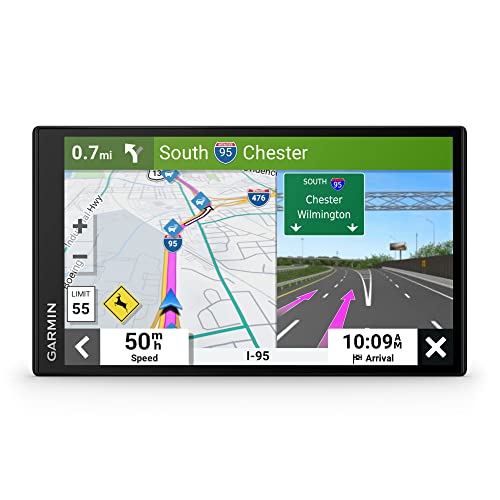
- ✓ Clear 6” display
- ✓ Strong connectivity
- ✓ Helpful safety alerts
- ✕ Alexa usage requires app
- ✕ Occasional slow reroutes
| Display Size | 6 inches |
| Map Updates | North America maps and updates |
| Connectivity | Built-in Wi-Fi; Bluetooth for hands-free calling; Garmin Drive app compatibility |
| Voice/Assistant | Alexa Built-in with Garmin Drive app pairing |
| Live Services | Live traffic, fuel prices, parking, weather, and smart notifications when paired with compatible smartphone |
| Power & Charging | Includes dual USB charger for additional charging port |
You’ve probably heard that GPS screens with big maps drain your attention and turn your drive into a nerdy breadcrumb trail. With the Garmin DriveSmart 66, that myth feels off the mark the moment you mount it and see the 6-inch high-res display up front.
I peeked at the North America map updates and felt a calm confidence rather than a jittery distraction.
The device sits nicely on the dash, and the screen quality is clear even on a sunny afternoon. Voice prompts are crisp, and the Garmin Drive app lets you swap directions without fiddling with the unit itself.
My favorite moment? asking for a nearby coffee shop and watching live traffic reroute me around a slowdown without me touching the screen.
Pairing with my phone via Bluetooth was straightforward, and hands-free calls sounded solid on both ends. The built-in Wi‑Fi actually makes updating maps painless, so you’re not hunting for a computer every time there’s a new route.
And yes, Alexa Built-in feels like a fun bonus—perfect for quick tunes or weather updates while you stay focused on the road.
Travel mode clicked for me when I used the HISTORY database and the national parks directory. You can discover notable sites without pulling over, which is a small but real upgrade on long road trips.
The road alerts—school zones, sharp curves, speed changes—feel like a natural safety net rather than nagging prompts.
In daily use, the DriveSmart 66 helps you plan smarter, not harder. The traffic and parking suggestions pop up at relevant moments, and the hands-free features keep your hands where they should be.
It’s responsive, practical, and friendlier than you’d expect for a dedicated car navigator.
Would I recommend it? If you want a reliable, well-connected navigator that doubles as a smart assistant in the car, this one earns its keep.
It’s a solid companion from the moment you press start until you reach your final stop.
Garmin DriveSmart 76, 7-inch Car GPS Navigator Bright,
- ✓ Clear 7” display
- ✓ Strong live updates
- ✓ Easy Bluetooth pairing
- ✕ Occasional reroute latency
- ✕ Alexa feature requires app use
| Display Size | 7 inches |
| Navigation Maps | North America map updates included |
| Connectivity | Built-in Wi-Fi for map/software updates; Bluetooth for hands-free calling |
| Voice/Assist Features | Voice Assist; Garmin Real Directions; Alexa Built-in (requires Garmin Drive app pairing) |
| Live Services | Live Traffic; Live Weather; Parking; Fuel Prices; Smart Notifications |
| Vehicle Safety/Alerts | Driver Alerts including school zones, sharp curves, and speed changes |
You’ve got to love how the Garmin DriveSmart 76 instantly feels approachable the moment you drop it in the car. The 7” high-resolution display is bright and easy to read, even with glare off the windshield, and setup felt straightforward right out of the box. It’s clear Garmin designed this with real driving in mind, not just a pretty screen you stare at in the showroom. The Garmin DriveSmart 76, 7-inch Car GPS Navigator Bright, is a standout choice in its category.
During my test, the Live Traffic and Weather features proved genuinely useful for a midweek commute, updating routing on the fly as I passed through a couple of construction zones. The integration with the Garmin Drive app kept my map updates current without needing a PC, and the Voice Assist and hands-free calling made conversations or quick queries feel effortless while keeping hands on the wheel. When comparing different best gps for car options, this model stands out for its quality.
Parking and Traffic Cams brought an extra layer of practicality, and the TripAdvisor integration along with the National Parks Directory gave me helpful context for a road trip. I also appreciated the built-in Wi-Fi for updates and the dual USB charger that kept my phone charged on longer drives, which was a thoughtful touch for anyone who travels with multiple devices.
Garmin DriveSmart 86 GPS Navigator with High-Res Maps
- ✓ Large, readable display
- ✓ Live traffic and updates
- ✓ Hands-free calling and voice assist
- ✕ Size may dominate dash
- ✕ Requires pairing for full features
| Display | 8-inch high-resolution, dual-orientation touchscreen |
| Maps / Navigation | North America maps with lifetime/regular updates (map updates mentioned in description) |
| Connectivity | Built-in Wi-Fi for map and software updates; Bluetooth for hands-free calling; Garmin Drive app integration |
| Smart Features | Alexa Built-in; smart notifications; live traffic and weather; traffic cams; parking info; Tripadvisor and National Parks directory; Foursquare POIs |
| Driver Safety & Alerts | Driver alerts (e.g., school zones, sharp curves, speed changes) |
| Power / Charging | Included dual USB charger for additional devices |
You grip the Garmin DriveSmart 86, and the first thing that stands out is that 8-inch, high-res screen just begging to be used. I cranked navigation during a long highway leg and was surprised by how responsive the display feels, almost like gliding through a tablet while you’re steering.
The map snapped into clear view in seconds, and I found the dual-orientation mode handy for quick glances from either seat.
As soon as I started driving, the Voice Assist kicked in. I asked for a coffee shop near my route, and the screen popped up results with quick, natural speech directions.
It’s comforting to have hands-free calling ready when you’re juggling a phone and a GPS, especially on a busy morning. The live traffic updates also showed how the route could bend around a slowdown without making me guess where the congestion started.
The built-in features feel like a well-stocked road trip buddy. TripAdvisor data and the National Parks directory add little moments of delight, like discovering a hidden overlook before it becomes a detour.
The Garmin Real Directions and POIs make it feel less like a gadget and more like a local guide you trust. The Wi-Fi updates mean you’re rarely stuck with stale maps, which is priceless when you’re hopping between states.
In practice, the voice prompts are clear, and the parking and traffic cams view helps when you’re pulling into unfamiliar lots. The charger included with the unit is a small win, letting you keep phones fueled without hunting for ports.
It’s not just a map; it’s a smart, connected travel companion you actually reach for when you need it.
Would I miss something? If your car’s dash space is tight, the size is a trade-off, but the readability and features make it worth it.
What Features Make a Car GPS the Best Choice?
When choosing the best GPS for a car, several features are essential to consider:
- Real-Time Traffic Updates: A GPS that provides real-time traffic updates can help drivers avoid congested areas, saving time and reducing stress during travel. This feature typically uses live data to reroute drivers around traffic jams and accidents, ensuring a smoother journey.
- User-Friendly Interface: An intuitive interface is crucial for allowing drivers to input destinations and access features quickly and easily while on the road. A clear display with straightforward menus and voice commands can enhance usability and minimize distractions.
- Voice Navigation: Voice-guided navigation helps drivers keep their eyes on the road while receiving turn-by-turn directions. This feature is particularly important for safety, as it reduces the need for drivers to look at the screen frequently.
- Points of Interest (POI) Database: A comprehensive POI database allows users to find nearby restaurants, gas stations, hotels, and attractions with ease. This feature enhances convenience during trips, especially in unfamiliar areas.
- Route Customization: The ability to customize routes according to preferences, such as avoiding tolls or highways, provides a tailored travel experience. This flexibility can be beneficial for drivers looking to explore scenic routes or save on travel costs.
- Screen Size and Resolution: A larger screen with high resolution offers better visibility and makes it easier to read maps and directions from a distance. This feature can significantly improve the overall navigation experience, particularly in complex driving situations.
- Battery Life: An extended battery life allows for longer trips without needing to recharge, which is especially useful for road trips or when driving in remote areas. Some GPS devices also offer charging options through the car’s power outlet, ensuring they stay operational during long journeys.
- Offline Maps: Having the option to download maps for offline use is advantageous in areas with poor cellular service. This ensures uninterrupted navigation and access to essential information even in remote locations.
What Are the Top Car GPS Brands and Their Unique Offerings?
Magellan: Magellan offers a range of GPS units, catering to both budget-conscious consumers and those looking for advanced features. Their devices often include travel planning tools and a robust points of interest database, making them ideal for road trips and exploration.
Rand McNally: Rand McNally has a strong reputation in the trucking industry, providing GPS devices that account for truck-specific routes and restrictions. Their products often come with features tailored for commercial drivers, such as mileage tracking and compliance with federal regulations.
Google Maps: As a widely used navigation app, Google Maps provides a free and highly accessible option for drivers. Its features include turn-by-turn navigation, real-time traffic conditions, and integration with other Google services, making it a powerful tool for everyday use.
How Do Different Features Impact the Reliability of a Car GPS?
Different features significantly influence the reliability of a car GPS system.
- Real-time Traffic Updates: Real-time traffic information allows GPS systems to provide the most efficient routes by avoiding congestion and accidents. This feature enhances reliability as it enables drivers to make informed decisions and adjust their routes on-the-fly, ensuring timely arrivals.
- Map Accuracy and Updates: The accuracy of maps is crucial for reliable navigation, as outdated or incorrect maps can lead to wrong turns or missed exits. Regular updates ensure that the GPS reflects current road conditions, new constructions, and changes in traffic patterns, enhancing the overall user experience.
- GPS Signal Strength: A strong and consistent GPS signal is essential for accurate positioning and navigation. Areas with poor satellite visibility, such as urban canyons or dense forests, can disrupt the signal and affect the GPS’s performance, making it less reliable.
- User-Friendly Interface: A clear and intuitive interface helps drivers quickly access necessary information without distraction. A well-designed interface reduces confusion and errors, allowing for a safer driving experience and more reliable navigation.
- Voice Guidance: Effective voice guidance provides turn-by-turn directions, allowing drivers to keep their eyes on the road. This feature improves reliability by minimizing the need to glance at the screen, thus reducing the risk of accidents during navigation.
- Integration with Other Devices: The ability to integrate with smartphones or other devices enhances the functionality of a car GPS. Features like hands-free calling and music streaming can lead to a seamless driving experience, making the GPS more reliable as it becomes a central hub for navigation and communication.
- Battery Life: A long-lasting battery is essential for portable GPS devices, ensuring they can operate throughout long journeys without the need for constant recharging. Reliability is compromised if the GPS shuts down unexpectedly due to low battery, making it vital for devices to have efficient power management.
- Emergency Services Access: Quick access to emergency services can be a lifesaver in critical situations. GPS systems that can automatically contact roadside assistance or provide location information to emergency responders enhance their reliability by ensuring safety on the road.
What Do Users Say About Their Experiences with Popular Car GPS Devices?
Users often share varied experiences with popular car GPS devices, highlighting their strengths and weaknesses.
- Garmin DriveSmart 65: Many users praise its large display and user-friendly interface, making navigation easy even for less tech-savvy individuals. The device offers live traffic updates and points of interest, which help users find the best routes and nearby amenities.
- TomTom GO Supreme: Users appreciate its lifetime map updates and traffic information, which are essential for avoiding delays. The voice command feature is frequently mentioned as a significant convenience, allowing drivers to keep their hands on the wheel while navigating.
- Magellan RoadMate 6630T-LM: Customers often highlight its affordability paired with essential features like free lifetime maps and traffic alerts. However, some users have reported occasional issues with the accuracy of the routing, suggesting that it may not always provide the quickest routes.
- Garmin nuvi 2589LMT: Users enjoy the clear graphics and reliable GPS signal, which contribute to a smooth navigation experience. The ability to customize routes and access nearby landmarks adds to its appeal, although some have noted that the device can be slow to recalculate routes.
- Rand McNally TND 750: This device is favored among truck drivers for its truck-specific routing, which considers vehicle size and weight restrictions. Users frequently mention its robust design and ease of use, though some express a desire for more frequent updates and a better interface.
How Can You Choose the Best GPS For Your Specific Driving Needs?
When selecting the best GPS for your car, several factors should be considered to ensure it meets your specific driving needs.
- Map Accuracy: Ensure the GPS has up-to-date maps and a reliable data source to provide accurate directions and information. Many devices offer lifetime map updates, which are essential for navigating through changing road conditions and newly constructed areas.
- Screen Size and Display Quality: The size and clarity of the screen can significantly impact usability. A larger, high-resolution screen allows for easier reading and better visibility, especially in bright sunlight, which is crucial for safe navigation while driving.
- Traffic Updates: Look for a GPS that includes real-time traffic information and rerouting capabilities. This feature can help you avoid congested areas and reduce travel time by suggesting alternative routes when delays are detected.
- User Interface: A user-friendly interface is important for ease of use. The GPS should have straightforward menus and intuitive navigation controls that allow you to input destinations and access features without distraction while driving.
- Voice Guidance: Reliable voice guidance helps keep your eyes on the road. A GPS with clear and natural-sounding voice prompts will provide timely directions without requiring you to frequently glance at the screen.
- Points of Interest (POI): Having access to a comprehensive database of points of interest can enhance your travel experience. This feature allows you to find nearby restaurants, gas stations, and attractions easily, making your journey more enjoyable and efficient.
- Bluetooth Connectivity: A GPS that supports Bluetooth can offer hands-free calling and integration with your smartphone. This functionality enhances safety by allowing you to manage calls without taking your hands off the wheel or eyes off the road.
- Battery Life: Consider the battery life of the GPS, especially if you plan on using it for long trips. A device with a long-lasting battery or the ability to connect to a power source while in use will ensure uninterrupted navigation.
- Customizable Routes: The ability to customize routes based on preferences, such as avoiding tolls or highways, can be beneficial for specific driving needs. This feature allows you to tailor your travel experience according to your preferences, making your journeys more enjoyable.
What Additional Features Can Enhance Your Car GPS Experience?
Several additional features can significantly enhance your car GPS experience:
- Real-Time Traffic Updates: This feature provides live traffic information, helping drivers avoid congested routes and delays. By rerouting based on current conditions, it can save time and reduce frustration during travel.
- Voice Navigation: Voice-guided directions allow drivers to keep their eyes on the road while receiving turn-by-turn instructions. This hands-free feature enhances safety and makes navigating easier, particularly in unfamiliar areas.
- Points of Interest (POI): GPS systems that include a comprehensive database of points of interest enable users to find nearby attractions, restaurants, gas stations, and more. This feature enhances the travel experience by making it easier to explore new places.
- Customizable Routes: The ability to customize routes based on preferences—such as avoiding tolls or highways—allows drivers to tailor their journey according to their needs. This flexibility can make trips more enjoyable and aligned with personal preferences.
- Speed Limit Alerts: GPS devices that provide speed limit alerts help drivers stay within legal limits and avoid potential fines. This feature can also contribute to safer driving habits by reminding users of speed regulations in different areas.
- Offline Maps: Having access to offline maps ensures that navigation is possible even in areas with poor or no internet connectivity. This feature is particularly useful for long road trips or travels through rural locations where signal may be unreliable.
- Multi-Language Support: GPS systems with multi-language support cater to a diverse range of users, making navigation accessible for non-native speakers. This feature is especially beneficial for international travelers or those living in multilingual regions.
- Integration with Smartphone Apps: The ability to integrate with smartphone apps enhances functionality, allowing access to music, calls, and notifications directly through the GPS device. This seamless connectivity improves convenience and keeps drivers focused on the road.
Why Is It Important to Keep Your GPS Updated?
This happens because updated GPS systems provide the most accurate and reliable navigation information, ensuring drivers can avoid obstacles, traffic jams, and road closures.
According to a study by the American Automobile Association (AAA), nearly 25% of drivers use outdated GPS systems, which can lead to inefficient routes and increased travel times (AAA, 2021). Keeping your GPS updated allows access to real-time traffic data and the latest mapping changes, which is crucial for effective navigation.
The underlying mechanism involves the continual changes in road conditions, construction projects, and traffic patterns. GPS devices rely on satellite signals and databases that are frequently updated to reflect these changes. When a GPS system is not updated, it may suggest routes that are no longer viable, leading to delays and frustration for drivers. Furthermore, outdated software may lack improvements in algorithms that enhance routing efficiency, making a significant difference in travel experience.
Moreover, updated GPS systems often include new features such as points of interest, speed limit changes, and safety alerts that can enhance driver safety and efficiency. Research from the University of Michigan Transportation Research Institute indicates that drivers who utilize updated navigation systems are less likely to experience accidents and other road-related issues, highlighting the importance of keeping these devices current.
Related Post: