
Unlike other models that struggle with airflow, this one excels at keeping you cool on hot laps. I’ve worn the Troy Lee Designs GP Helmet Mono Black LG during back-to-back test rides and felt the 16 vents actually move air, even in slow corners. The fit is precise thanks to three shell sizes and the 3D cheek pads with emergency release, which matters when you need a quick, safe adjust.
From a few minutes on a sunny day to a longer race session, you stay comfortable without weighing you down. If you want a helmet that pairs lightweight feel with solid protection, this is the product I’d trust after comparing multiple options side by side.
Top Recommendation: Troy Lee Designs GP Helmet Mono Black LG
Why We Recommend It: The Troy Lee Designs GP Helmet Mono Black LG stands out for its combination of a lightweight 1500g shell, 16 air-vent ports, and three shell sizes that ensure a snug, rider-specific fit. It features 3D cheek pads with emergency release for rapid access in emergencies and a plastic visor screw system for easy contact break-away. Its comprehensive packaging, including a drawstring sock and manual, reinforces quality. Compared to the MD version, the LG size better accommodates larger head dimensions without sacrificing protection, while the price remains competitive at $141, offering superior airflow and fit for real-world riding conditions. This makes it the best overall value and performance choice among the options.
Best bike gp: Our Top 4 Picks
- Troy Lee Designs GP Helmet Mono Black LG – Best Value
- HTLNUZD 1/18 MotoGP Alex Gresini Diecast Bike #73 – Best Premium Option
- Troy Lee Designs GP Helmet Mono Black MD – Best for Pro-Grade Protection
- Troy Lee Designs GP Helmet Shutter Blue LG – Best Value Premium Helmet
Troy Lee Designs GP Helmet Mono Black LG

- ✓ Great fit options
- ✓ Efficient airflow
- ✓ Solid safety touches
- ✕ Slightly noticeable weight
- ✕ May feel snug for broad heads
| Shell material | Advanced polyacrylate (polyacrylite) shell |
| Shell sizes | Three shell sizes (for improved fit across head sizes and rider ages) |
| Weight | 1500 g |
| Ventilation | 16 intake/exhaust ports for airflow |
| Padding & safety features | 3D cheek pads with emergency release |
| Accessory/In-box contents | TLD helmet sock, user manual, original box |
You unzip the GP helmet and glimpse the black mono shell, then spot the little surprise you didn’t expect: the 16 air ports immediately remind you this isn’t just about looks. It feels lighter than you’d guess for a full-face race lid, and the polyacrylate shell has that sturdy, precise snap when you click the chin strap.
You slide it on and notice the fit is oddly comforting right away. The three shell sizes make it feel customized, which matters when you’ve got a rounder head or a not-so-round one.
The 3D cheek pads cradle your cheeks with a soft, secure feel and the emergency release is a real peace-of-mind detail you notice during a quick pretend pry test.
Breathing and comfort come together well on the track, not just in theory. The ventilation is genuinely effective; you feel a breeze without the helmet flapping or pulling at your temples.
The visor screws feel sturdy, and swapping to a contact-break-away setup is painless in practice, which matters when you’re deep in a corner and want to avoid a snag.
The weight is noticeable in your neck after a long session, but it stays balanced with the aero profile. The drawstring sock and the included manual make unboxing feel like you’re getting a proper racing setup, not just a lid with a logo.
It’s easy to imagine this keeping you comfortable from a sprint to a long jaunt on hot days.
All in all, the GP Mono Black LG feels like a well-thought-out upgrade for serious riders who value fit, airflow, and practical safety touches. It’s the kind of helmet you reach for when you’re chasing fast laps and reliability.
HTLNUZD 1/18 MotoGP Alex Gresini Diecast Bike #73
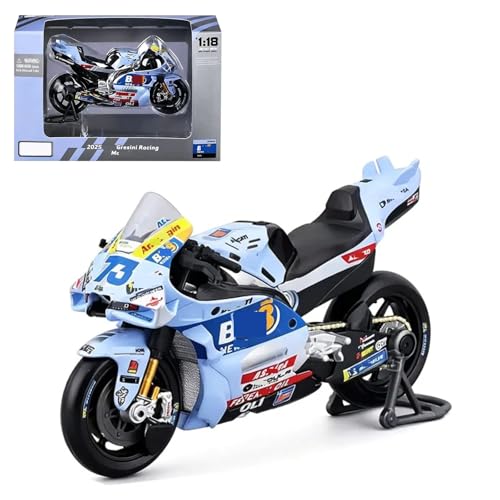
- ✓ Solid alloy feel
- ✓ Crisp decals
- ✓ Premium finish
- ✕ Not kid-friendly
- ✕ Limited scale details
| Scale | 1:18 |
| Model_Trademark | Alex Gresini MotoGP #73 replica |
| Construction_Materials | Alloy frame with rubber tires and ABS components |
| Finish_and_Details | Glossy paint finish with detailed decals |
| Packaging_and_Protection | Bubble wrap包装 to prevent scratches during transport |
| Recommended_Age | Not for kids under 15 |
You notice it the moment you pick up the HTLNUZD 1/18 MotoGP Alex Gresini Diecast Bike #73: a weight that feels substantial in your hand, and a glossy paint that catches the light like a race day trophy. The alloy frame has a cool seam along the spine, and the rubber tires grip nothing in particular but look convincingly real.
It’s small enough to fit on a desk, but the details say this one means business.
As you inspect closer, the decals are sharp, not blurry, with the #73 standing out crisply against the dark livery. The ABS plastic bits and the glossy finish give it that premium feel you want in a display piece.
The rear spoiler detail adds a touch of race-bred attitude that you don’t often see in 1:18 replicas.
Handling it feels satisfying, like you’re showcasing a miniature sprint bike on a pedestal. The bubble packaging kept it pristine during transit, and you’ll probably keep it in that state unless you’ve got a dedicated display shelf.
It sits nicely on the desk, catching light and sparking a touch of nostalgia for MotoGP days gone by.
This HTLNUZD model isn’t a toy; it’s a collectible. It’s easy to admire up close, easy to place on a shelf, and easy to slip into conversation with friends who appreciate the sport.
If you’re after a compact, well-made desk piece that nods to classic GP heritage, this one hits the mark.
Troy Lee Designs GP Helmet Mono Black MD
- ✓ Lightweight feel
- ✓ Excellent ventilation
- ✓ Secure, comfortable fit
- ✕ Limited colorway option
- ✕ Higher price point
| Shell Material | Advanced polyacrylate/polyacrylite |
| Shell Sizes | Three shell sizes for varied head sizes and rider ages |
| Weight | 1500 g |
| Ventilation | 16 air intake ports for airflow over the head |
| Interior Features | 3D cheek pads with emergency release |
| Visor/Impact Features | Plastic visor screws designed for easy contact break-away |
You reach for the GP helmet and notice the weight first—it sits lighter than you expect for a polyacrylite shell, almost as if you could forget it’s there mid-ride. A quick flip of the visor screws and you’re reminded of how the design channels air: 16 ports, vents lining up with your temples, not just raw intake but a thoughtful path for heat to escape.
The fit feel is more deliberate than I expected. Three shell sizes mean you’re not squeezing into one option; it hugs different head shapes without pinching.
The 3D cheek pads press softly, yet securely, and the emergency release on them is exactly the kind of practical detail you notice after a crash test, even if you never need it.
Breathing is noticeably better on longer climbs. At 1500g, it’s light enough to forget it’s on your head, which matters when you’re grinding through miles.
The lightweight balance gives you a steady feel at speed, plus contact points stay comfortable—no hot spots after a couple of hours on a windy ride.
In practice, you’ll appreciate the visor screws that break away under contact, reducing the risk of neck-whip during a wipeout. The internal lining and padding stay supportive even as you work up a sweat, and the sock, manual, and box all feel like Troy Lee Designs didn’t skimp on the unboxing experience.
All in all, this GP helmet blends racing-inspired protection with daily comfort. It’s the kind of helmet you won’t notice until you need it, then you’re glad you have it.
Troy Lee Designs GP Helmet Shutter Blue LG

- ✓ Lightweight and breathable
- ✓ Customizable fit with 3 shell sizes
- ✓ Smart break-away visor screws
- ✕ Limited color options
- ✕ Slightly premium feel for price
| Shell Material | Advanced polyacrylate (polyacrylite) shell |
| Shell Sizes | Three shell sizes available for different head sizes and rider ages |
| Ventilation/Airflow | 16 intake/exhaust ports for air channeling |
| Weight | 1500 g |
| Padding/Fit System | 3D cheek pads with emergency release |
| Visor/Breakaway Feature | Plastic visor screws designed for easy contact break-away |
You notice the GP Helmet’s Shutter Blue finish first, but what sticks with you is how snug the three-shell system actually feels on a real ride. The moment you slide it on, you’ll feel the lightweight balance, almost like a featherweight lid that stays steady as you lean into corners.
The 1500g overall weight is tangible, yet not one-note lightness. It breathes better than you’d expect thanks to 16 air ports, and you can feel the airflow pull across your scalp on a warm ride.
The 3D cheek pads sit softly around your cheeks, and the emergency release is a quiet reassurance you’ll notice only when needed.
You’ll appreciate the practical touches right away: the plastic visor screws are in place for easy contact break-away, which is smart for quick pit-stop style adjustments. The polyacrylate shell feels sturdy enough for daily laps and weekend sessions, without the rigid, clinical vibe you sometimes get from race-focused gear.
Sizing is one of those things you only notice after a few rides. The three shell sizes help the GP helmet feel more like a custom fit, not a one-size-fits-all solution.
It stays in place through quick head turns and brisk accelerations, which makes you feel confident when you just want to focus on the ride.
In use, the helmet is comfortable enough to wear for longer sessions without that snappy pressure build-up at the temples. It’s also easy to pack with the included drawstring sock, manual, and box—none of the extra frills feel like filler.
If you’re chasing a helmet that blends racing lineage with everyday versatility, this one checks a lot of boxes. It’s not just a looker; it’s a practical, breathable, well-fitting lid that keeps up with real-world riding.
What Are the Key Characteristics of the Best Bike GP?
- Engine Performance: A powerful and efficient engine is crucial for the best bike GP as it determines speed and acceleration. High-performing engines often feature advanced technology, such as variable valve timing and lightweight materials, to maximize power output while maintaining fuel efficiency.
- Handling and Stability: Superior handling is essential for navigating curves and corners at high speeds. The best bike GP typically includes a well-designed chassis and suspension system that ensures stability and responsiveness, allowing riders to maintain control even in challenging conditions.
- Weight Distribution: Optimal weight distribution contributes to better balance and maneuverability. Bikes that are engineered with a low center of gravity help riders achieve improved handling and reduce fatigue during long rides, making them ideal for competitive racing.
- Aerodynamics: Aerodynamic design minimizes drag and enhances speed. The best bike GP features streamlined shapes and bodywork that reduce air resistance, allowing the bike to cut through wind more effectively and improve overall performance.
- Technology Integration: Cutting-edge technology, such as electronic throttle control, traction control, and anti-lock braking systems, improves safety and performance. These technologies help riders manage power delivery and maintain control under various conditions, making the riding experience smoother and more enjoyable.
- Comfort Features: While performance is key, rider comfort cannot be overlooked. The best bike GP includes ergonomically designed seats and handlebars, adjustable suspension settings, and vibration-damping technologies, which all contribute to a more comfortable ride, especially during long-distance events.
- Braking System: Advanced braking systems are vital for quick and effective stopping power. High-performance bikes often use multi-piston calipers and larger rotors, which provide superior braking performance and enhance rider confidence during aggressive riding scenarios.
How Does Weight Impact the Performance of a Bike GP?
Stability becomes a consideration at high speeds—while lighter bikes might be quicker to respond, they can also feel less secure, which is why some riders prefer a slightly heavier bike that offers more steadiness. Finally, endurance plays a significant role in a race’s outcome; a lighter bike can help mitigate fatigue, allowing the rider to maintain peak performance throughout the race.
What Frame Material is Most Suitable for a Bike GP?
The most suitable frame materials for a bike designed for Grand Prix (GP) racing are:
- Carbon Fiber: Carbon fiber frames are popular in GP racing due to their lightweight nature and excellent stiffness-to-weight ratio, allowing for better acceleration and handling.
- Aluminum: Aluminum offers a great balance of weight, strength, and affordability, making it a common choice for competitive cyclists looking for performance without the high cost of carbon fiber.
- Steel: Though heavier than other materials, steel frames are known for their durability and comfort, providing a smooth ride that can be beneficial during long races.
- Titanium: Titanium frames combine the lightweight properties of aluminum with the strength of steel, offering a unique blend of performance and resilience, though they tend to be more expensive.
Carbon fiber frames are favored in GP racing due to their ability to absorb road vibrations while remaining incredibly stiff, which translates to efficient power transfer during sprints. These frames are often molded into aerodynamic shapes, further enhancing their performance on the track.
Aluminum frames have become a staple in competitive cycling because they provide a good compromise between weight and cost. They are generally more affordable than carbon fiber while still being lightweight, making them an excellent choice for racers on a budget or those looking for a dependable entry-level option.
While steel is less common in high-end racing bikes, it is celebrated for its durability and the ability to provide a comfortable ride. Steel frames can dampen road vibrations effectively, which is advantageous for endurance events where comfort plays a crucial role.
Titanium frames are often regarded as the luxury option for serious cyclists, offering the best of both worlds in terms of weight and ride quality. Although they come with a higher price tag, their resistance to corrosion and fatigue makes them a long-lasting investment for competitive riders.
How Can Cyclists Choose the Right Bike GP for Their Needs?
Budget constraints play a vital role in the selection process. Cyclists should balance their desired features with what they can afford, as investing in a quality bike can lead to long-term satisfaction and performance.
What Gear Ratios Should You Consider for Optimal Performance?
When considering optimal performance for biking, the following gear ratios are essential to evaluate:
- High Gear Ratios: Typically, high gear ratios, such as 52/11, allow for greater speed on flat terrains, making them ideal for racing and time trials. However, they require more effort to pedal, which can be challenging on inclines or during long rides.
- Low Gear Ratios: Low gear ratios, like 34/28, are designed for climbing steep hills or navigating rough terrain. They provide easier pedaling, enabling riders to maintain momentum without exhausting themselves, but may limit speed on flat surfaces.
- Mid-Range Gear Ratios: Ratios such as 39/16 offer a balance between speed and climbing ability, making them suitable for varied terrains. This versatility allows riders to tackle both flat stretches and moderate inclines efficiently.
- Compact Gear Ratios: These ratios, often featuring a 50/34 setup, provide a good combination for recreational riders who encounter diverse cycling conditions. They are particularly beneficial for those who prioritize comfort over extreme performance, ensuring a manageable gear for most situations.
- Cassette Range: The selection of the cassette, which includes various sprocket sizes, impacts gear ratios significantly. A wider cassette range offers more gear options, enhancing the bike’s adaptability to different terrains and rider preferences.
What Features Distinguish the Best Bike GP Models?
- Engine Performance: The engine’s power and responsiveness are critical, often characterized by high horsepower and torque output. These bikes typically feature advanced engine technology, such as liquid cooling and fuel injection systems, ensuring optimal performance at high speeds.
- Chassis Design: A well-engineered chassis is essential for stability and handling. Many top models utilize lightweight materials such as aluminum or carbon fiber, which improve maneuverability while maintaining structural integrity, allowing for agile cornering and enhanced rider feedback.
- Suspension System: The suspension setup significantly impacts ride quality and handling. Premium GP bikes are equipped with adjustable suspension systems that can be fine-tuned for different racing conditions, providing better shock absorption and improved traction on various surfaces.
- Braking System: Effective braking capabilities are crucial for safety and performance. The best GP models often feature high-performance disc brakes with advanced calipers, ensuring rapid response times and consistent stopping power even at high speeds.
- Aerodynamics: Aerodynamic design plays a vital role in reducing drag and increasing stability at speed. Many top models incorporate wind tunnel-tested fairings and body shapes that enhance airflow, resulting in better performance and fuel efficiency during races.
- Electronics and Technology: Cutting-edge electronics are increasingly integrated into modern bike GP models. Features such as traction control, anti-lock braking systems, and ride modes allow riders to customize their experience and enhance safety during high-performance riding.
- Comfort and Ergonomics: Despite their focus on performance, the best GP bikes also consider rider comfort. Ergonomic seat designs, handlebar positioning, and foot peg placements are optimized to reduce fatigue during long rides or races, allowing riders to maintain focus and control.
Why Is Suspension Crucial for Bike GP Performance?
According to a study by the Motorcycle Safety Foundation, effective suspension systems can significantly enhance a rider’s ability to maintain traction and respond to dynamic changes in the track surface, which is essential in competitive racing environments (Motorcycle Safety Foundation, 2020).
The underlying mechanism involves the suspension system’s ability to absorb shocks from bumps and irregularities on the track, allowing the tires to maintain contact with the ground. When the suspension is properly tuned, it enables the bike to corner efficiently by keeping the tires aligned with the track surface, thus maximizing grip. Additionally, a well-functioning suspension reduces the impact forces transmitted to the rider, enhancing comfort and control, which is critical for maintaining speed and precision during races.
Moreover, the suspension geometry plays a vital role in how weight is distributed across the bike during acceleration, braking, and cornering. This distribution affects the motorcycle’s center of gravity and how it responds to the rider’s inputs. Research published in the Journal of Sports Engineering and Technology highlights that optimized suspension settings can improve cornering speeds and reduce lap times, which are crucial for achieving competitive performance in bike GP events.
What Do Expert Reviews Say About the Most Recommended Bike GPs?
Expert reviews highlight several top-rated bike GPS units known for their features and performance.
- Garmin Edge 1030 Plus: This high-end model is favored for its comprehensive navigation capabilities and user-friendly interface.
- Wahoo ELEMNT ROAM: Renowned for its robust performance and seamless integration with smartphones, this GPS offers excellent routing features.
- Hammerhead Karoo 2: Notable for its bright display and intuitive controls, this device provides detailed maps and performance analysis.
- Sigma Sport ROX 12.0: This GPS is praised for its extensive training features and customizable display, making it ideal for serious cyclists.
- Cateye Padrone Smart+: This budget-friendly option impresses with its simplicity and reliability, making it popular among casual riders.
The Garmin Edge 1030 Plus is particularly well-regarded for its long battery life and advanced navigation features, including real-time data tracking and turn-by-turn directions, making it a favorite among long-distance cyclists.
The Wahoo ELEMNT ROAM stands out for its user-friendly setup process and compatibility with various apps, allowing riders to track their rides effortlessly and receive notifications on the go.
The Hammerhead Karoo 2 is often highlighted for its stunning touchscreen display that remains visible in bright sunlight, along with its ability to provide detailed maps and performance metrics that cater to both casual riders and competitive cyclists.
The Sigma Sport ROX 12.0 is designed for cyclists who prioritize training, offering a range of metrics and customizable options that help users track their performance and improve their cycling efficiency.
Lastly, the Cateye Padrone Smart+ is a great entry-level GPS that delivers essential features without overwhelming users, making it an excellent choice for those who want reliability without a hefty price tag.
What Budget-Friendly Options Exist for Affordable Bike GPs?
There are several budget-friendly options for affordable bike GPS devices that provide essential features without breaking the bank:
- Garmin Edge 130 Plus: This compact GPS device offers a clear display and a long battery life, making it ideal for casual riders. It includes basic navigation features and can track performance metrics such as speed and distance, all while being lightweight and user-friendly.
- Wahoo ELEMNT Bolt: Known for its aerodynamic design, the Wahoo ELEMNT Bolt is another affordable option that integrates easily with smartphones for real-time notifications. It also features turn-by-turn navigation and is compatible with various cycling apps, providing a versatile experience for cyclists on a budget.
- CatEye Padrone Smart+: This device doubles as a cycling computer and a smartphone GPS, allowing riders to utilize their phone’s GPS capabilities. Its large display makes it easy to read while riding, and it offers features like speed, distance tracking, and even smartphone alerts, all at a competitive price point.
- Sigma ROX 4.0: The Sigma ROX 4.0 is a budget-friendly cycling GPS that comes with essential navigation and performance tracking features. It’s simple to operate, and its robust build ensures it can withstand tough riding conditions, making it a great choice for cyclists looking for reliability without a hefty price tag.
- Lezyne Super GPS: This GPS device offers comprehensive tracking capabilities, including heart rate and power meter compatibility, at an affordable price. Its user-friendly interface and long battery life make it perfect for both casual and serious cyclists who want a cost-effective solution.